
Chilli · Vegetative
Kharif Chilli Stage-wise Care Guide for Guntur, Palnadu and Khammam
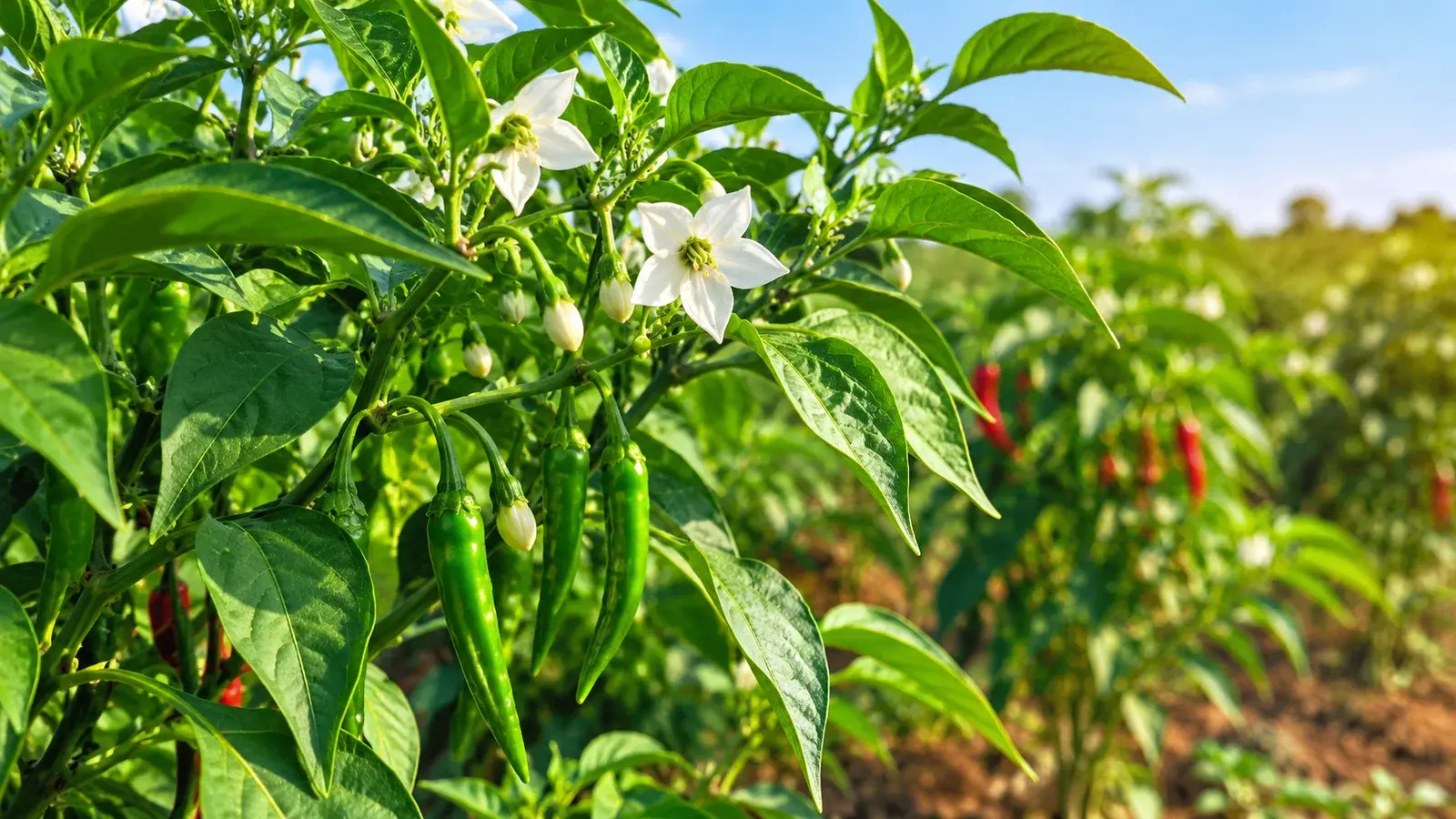
Why a stage-wise plan matters
Chilli in Guntur, Palnadu, Krishna and Khammam is a long crop. The nursery goes in with the first monsoon rains, the field stands through the wet months, flowering and fruit set run through the cooler season, and red-pod pickings and drying stretch into the next year. Each stage has its own risk, so it helps to know in advance what to watch for. ICAR-IISR notes that Andhra Pradesh leads India in chilli and that the crop likes warm, humid weather but not poor drainage. The practices below come from ICAR-IISR, the Government of India thrips booklet for chilli hosted by ICAR-IIHR, and ANGRAU's KVK at Garikapadu in Krishna district.
Stage 1: Nursery (June to July)
Timing: ICAR-IISR lists July for the nursery (July to August for direct sowing), once the south-west monsoon has set in.
Raised beds: Make raised nursery beds with soil mixed with well-pulverised organic matter. Do not apply chemical fertiliser in the nursery bed; use a foliar nutrient only if seedlings look weak.
Protected nursery: Where possible raise seedlings in protrays under insect-proof net. In an open nursery, keep sticky traps at ground level next to the seedlings to catch early thrips.
Seedling age: Healthy seedlings of five to six weeks are right for transplanting. Weak or overgrown seedlings establish poorly.
Seed treatment: Treat seed as per the label and your local agriculture officer or ANGRAU / PJTSAU recommendation to protect against damping off and early sucking pests.
Stage 2: Transplanting (July to August)
Soil: Well-drained black soils and light soils with irrigation suit chilli best. Fields that stay waterlogged get more pests and diseases.
Beds: ICAR-IISR suggests raised beds about 3 ft wide and 1 ft high with 2 ft furrows, which drain heavy rain quickly in our black soils.
Spacing: Plant at 60 x 30 cm (45 x 45 cm is the other recommended option). Do not crowd plants; the thrips booklet warns that dense planting favours pest build-up.
Time of day: Transplant hardened seedlings in the late afternoon into moist soil and give a light irrigation.
Barrier: Sow two or three thick rows of sorghum, maize or bajra around the field as a border against thrips moving in. Silver reflective mulch of 25-30 micron reduces thrips pupating in the soil.
A seaweed and humic based growth booster can support root establishment after transplanting; use it as per label.
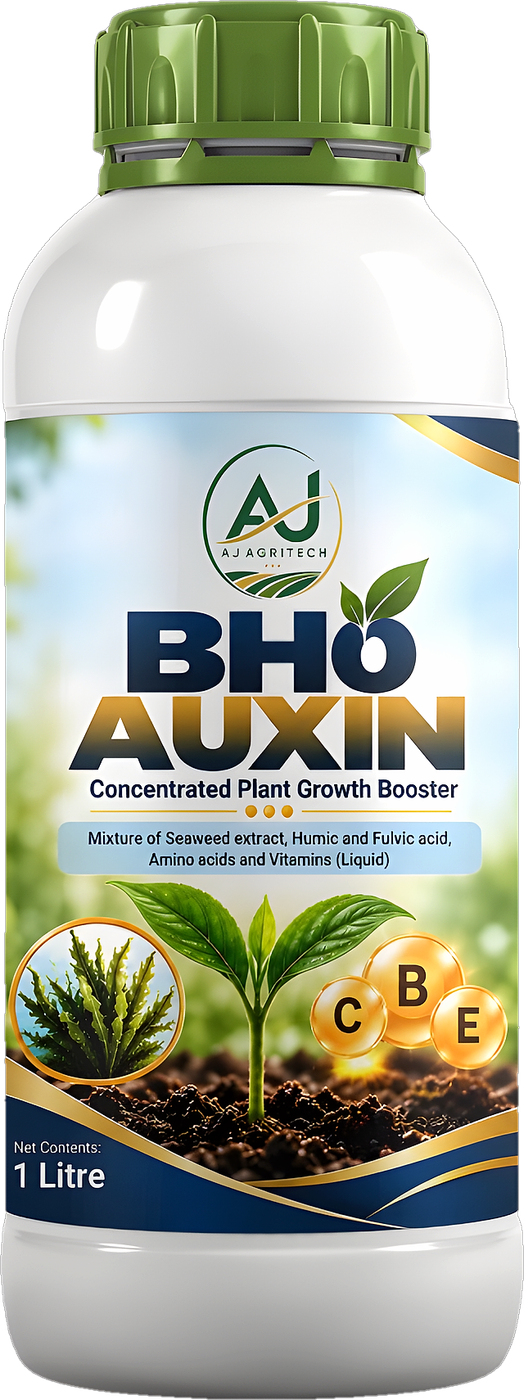 AJ Bho AuxinView details
Stage 3: Vegetative growth (August to September)
Intercultivation: Run a tyned or blade harrow every 15-20 days. This controls weeds and disturbs thrips pupae in the soil. Keep bunds weed-free and remove Parthenium, wild Solanum and other weeds that host thrips.
Nitrogen: Avoid excess nitrogen. The DPPQS booklet notes that it makes plants succulent and attractive to pests. Prefer straight fertilisers over complexes, apply all phosphorus as basal and give adequate potash.
Balanced dose: ANGRAU's KVK Garikapadu found a balanced dose, against the far heavier farmer dose, reduced pod whitening at ripening; drip fertigation saved 18-20 percent water and 25-40 percent fertiliser.
Irrigation: Irrigate when 40-60 percent of available soil moisture is used up, and give supplemental irrigation at critical stages in a dry spell.
Micronutrients: Correct micronutrient deficiencies with a foliar spray as per label; ask your AO to confirm the deficiency from leaf symptoms.
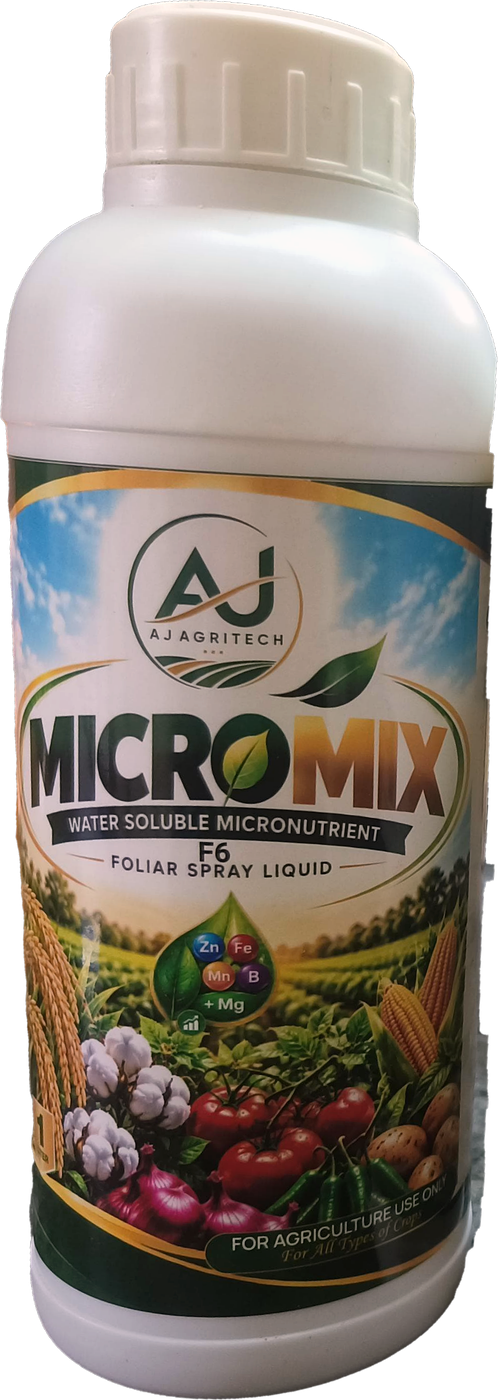 AJ Micromix F6View details
Stage 4: Flowering (September to October)
Flower drop in chilli, the DPPQS booklet says, "is influenced by the climatic conditions and moisture level in the soil", and severe thrips attack can also cause it. Keep soil moisture even, avoid water stagnation after rain, and keep thrips under watch with sticky traps. KVK Garikapadu reported less flower and fruit drop and better yields in chilli after foliar micronutrient sprays. For pest control follow the label and your AO / ANGRAU / PJTSAU; ICAR-IISR advises against mixing more than two pesticides or repeating the same chemical.
Stage 5: Fruit development and ripening (October to January)
Do not let fruits touch the soil; provide drainage so pods do not pick up fungal rot.
Use pheromone traps and bird perches for fruit borers, as ICAR-IISR suggests, and act on the AO's advice if borer damage appears.
Continue balanced nutrition with adequate potash; avoid late heavy nitrogen.
Stage 6: Harvest and drying (December to March)
For red chilli, pick fully ripened, partially withered pods. Picking immature pods causes discolouration.
Dry pods to about 10 percent moisture. Poorly dried chilli can lose 35-50 percent in the supply chain through mould and discolouration.
Dry on a clean platform or in a polyhouse solar dryer, protected from rain. Over-long sun drying wrinkles and fades the pods.
Pack in clean new gunny bags, do not sprinkle water on dry chilli, avoid Rhodamine colouring, and use cold storage at 4-7 degrees C to hold colour.
Quick checklist
Nursery on raised beds in July; transplant five to six week old seedlings.
60 x 30 cm spacing on raised beds with drainage furrows.
Sorghum or maize border rows and sticky traps from nursery onwards.
Harrow every 15-20 days; keep bunds weed-free.
Balanced fertiliser, no excess nitrogen, foliar micronutrients as per label.
Irrigate at 40-60 percent soil moisture depletion; drain after heavy rain.
Pick fully ripe pods, dry to about 10 percent moisture, pack in clean bags.
For pests and diseases follow the label and your AO / ANGRAU / PJTSAU.
Sources
Chilli - Good Agricultural Practices (September 2019) — ICAR-Indian Institute of Spices Research / Spices Board India
Monitoring, Diagnosis and Management of South East Asian Thrips, Thrips parvispinus in Chilli (June 2022) — Directorate of Plant Protection, Quarantine & Storage, Govt of India (hosted by ICAR-IIHR)
An Overview on Dr. K.L. Rao Krishi Vigyan Kendra, Garikapadu, Krishna District — ANGRAU / ICAR KVK Garikapadu