
Groundnut
Groundnut Crop Care Stage by Stage: Kharif Rainfed and Rabi Irrigated Guide for AP and Telangana
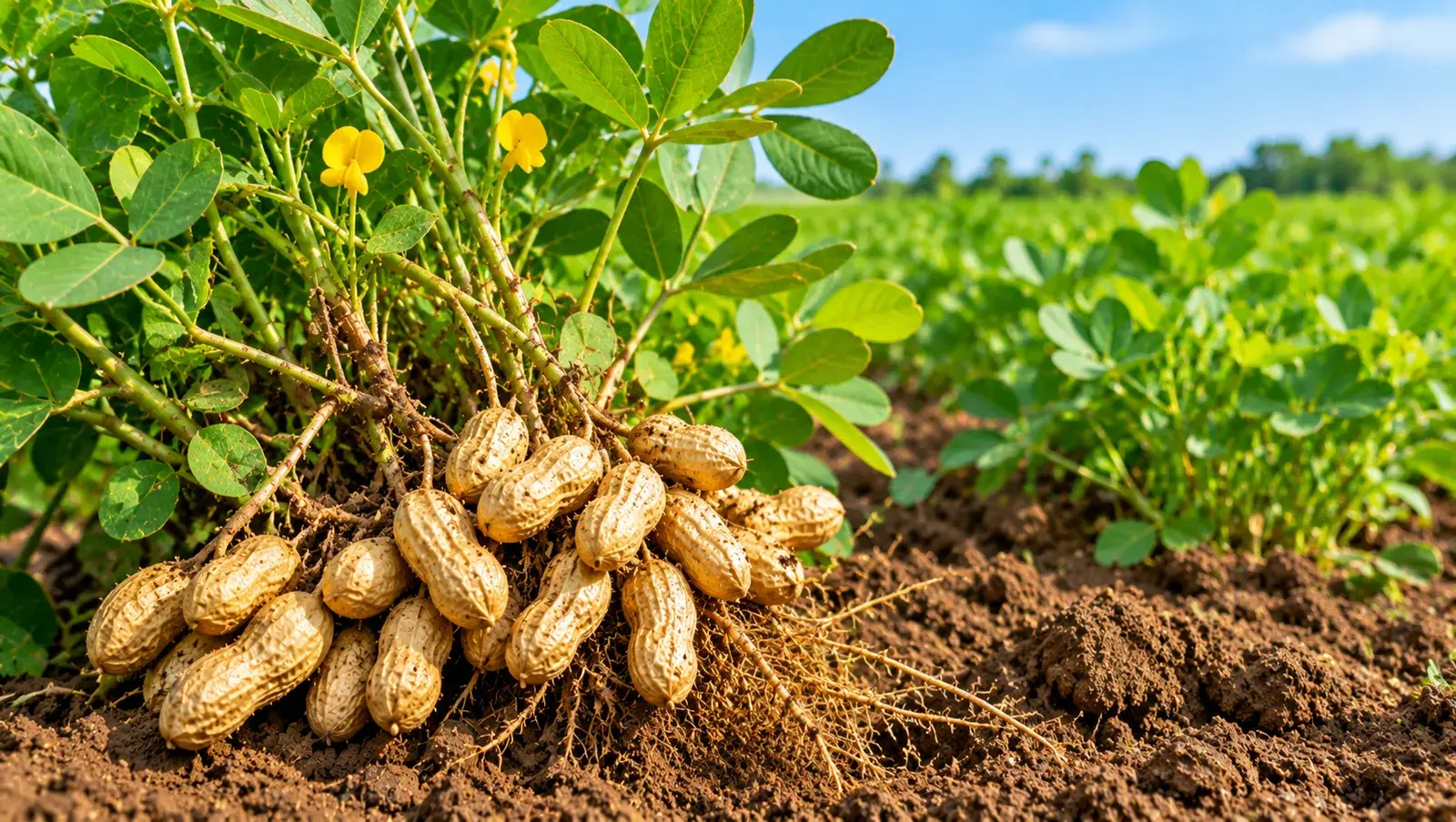
Where and when groundnut is grown
ANGRAU's outlook report notes that Sri Sathya Sai, Ananthapuramu, Kurnool, Annamayya and Chittoor districts hold 63 per cent of Andhra Pradesh's groundnut area and 74 per cent of its production, most of it rainfed. In Telangana PJTSAU puts the crop at about 2 lakh hectares, mainly in Mahabubnagar, Warangal, Nalgonda and Karimnagar, and stresses crop rotation. The ICAR-DGR package of practices for Andhra Pradesh gives two sowing windows: 15 June to 31 July for kharif and November to December for rabi; the ICAR 2025 advisory for the state puts rainfed sowing at July to the first week of August.
Before sowing
Summer plough and apply FYM or compost at about 10 t/ha once in two or three seasons. Follow a soil test; ICAR-DGR's base dose for AP is 20 kg N, 40 kg P2O5 and 50 kg K2O per hectare, phosphorus as single super phosphate.
Use recommended varieties such as Kadiri-6, Narayani, Kadiri-9, Dharani, Kadiri Amaravathi, Kadiri Chitravathi, Kadiri Lepakshi or Tirupati-4 (Spanish bunch) and Kadiri 7 bold (Virginia).
Seed rate: 125 to 150 kg kernels per hectare in kharif and 150 to 180 kg in rabi, depending on kernel size. Spacing for Spanish bunch types: 30 x 10 cm in kharif, 22.5 x 10 cm in rabi.
Treat seed (bio-agent, then insecticide and fungicide, then Rhizobium) following the label and your local agriculture officer or ANGRAU / PJTSAU recommendation.
Rainfed farmers should intercrop with redgram or castor at 7:1 or 11:1 rows, open conservation furrows every 3.6 m at sowing or 20 to 30 days later to hold rainwater, and sow 4 to 8 border rows of bajra or jowar to slow the thrips that spread bud necrosis.
Sowing to 25 days: establishment
The crop needs no irrigation for about 25 days after emergence; in rabi ICAR-DGR advises withholding irrigation for 25 days after establishment so roots go deep and flowering comes in one flush. Keep the field weed-free up to 45 days. The ICAR-DGR technical bulletin recommends hand weeding at about 20 and 35 days, with inter-cultivation every 7 to 10 days until pegging begins.
Flowering: 20 to 40 days after sowing
Flowering is the first of three moisture-sensitive stages. In rainfed fields ICAR's AP advisory asks for a 20 mm supplemental irrigation at flowering and peg penetration if a dry spell hits, and a potassium nitrate or 19:19:19 spray right after the dry spell. This is also the stage for gypsum: the ICAR-DGR package for AP recommends 500 kg of gypsum per hectare at flowering, placed near the plant rows (see our separate gypsum article).
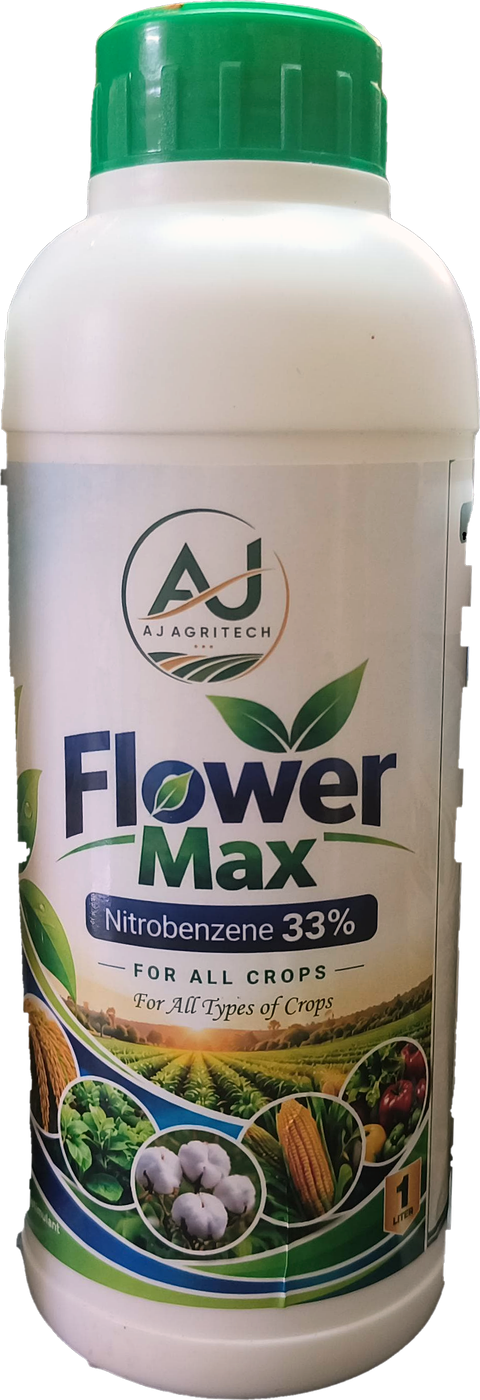 AJ Flower MaxView details
AJ Flower Max is a flowering booster for the flowering stage of the crop; use as per label when flowering starts.
Pegging and pod development: 40 to 70 days
Pegs start going into the soil around 40 days after sowing. From then on do not hoe or weed deeply; pull large weeds by hand. Soil moisture during pegging is crucial for pod formation. For rainfed fields ICAR-DGR suggests groundnut-shell mulch at 12.5 t/ha at 15 to 20 days after sowing. Yellowing between the veins of young leaves in calcareous patches is iron chlorosis; the AP package recommends a 0.5 per cent ferrous sulphate spray with 0.1 per cent citric acid at weekly intervals, and zinc sulphate at 50 kg/ha once in three seasons where zinc is low.
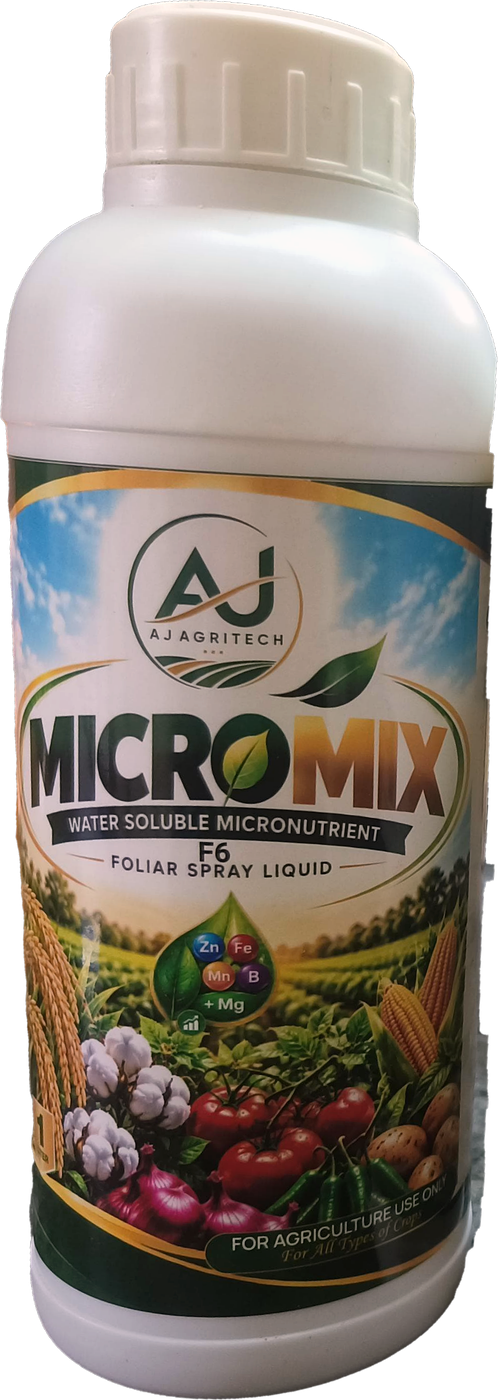 AJ Micromix F6View details
AJ Micromix F6 is a water-soluble micronutrient foliar spray with Zn, Fe, Mn, B and Mg; it fits fields showing deficiency symptoms at this stage; apply as per label.
Pod filling and maturity: 70 to 100 days
Pod filling is the last moisture-sensitive stage. For the irrigated rabi crop ICAR-DGR's AP package suggests 8 to 9 irrigations at 10-day intervals, the last at 90 to 95 days after sowing, about 400 to 450 mm; sprinklers save 24 to 30 per cent. Where water is short, the bulletin's minimum is one irrigation at 25 days and two more between 45 and 75 days. For leaf spots, rust and caterpillars, scout the field and follow the label and your local agriculture officer or ANGRAU / PJTSAU recommendation.
Harvest and drying
Harvest when 75 to 80 per cent of pods are mature: foliage yellows, old leaves drop, pods feel hard, the inside of the shell turns dark with netted veins and the seed coat shows its pink or red colour.
Early harvest lowers yield and oil and exposes kernels to aflatoxin; late harvest raises stem rot and pod loss.
If the soil is dry, give a light irrigation 2 to 3 days before pulling, or use a blade harrow or digger.
Dry pods in thin layers in the sun to about 8 to 9 per cent moisture before storing; never heap wet pods.
Quick checklist
Kharif sowing 15 June to 31 July (rainfed: July to first week of August); rabi November to December.
Soil-test fertiliser, FYM 10 t/ha, treated seed, redgram intercrop 7:1 or 11:1, conservation furrows.
No irrigation for 25 days after emergence; weed-free to 45 days; weedings at 20 and 35 days.
Flowering 20 to 40 days: protect from moisture stress, apply gypsum.
Pegging from 40 days: no hoeing, keep soil moist, correct iron and zinc deficiency.
Rabi: 8 to 9 irrigations at 10-day intervals, last at 90 to 95 days.
Harvest at 75 to 80 per cent mature pods; dry to 8 to 9 per cent moisture.
Sources
Package of practices (PoP's) of groundnut for different states — ICAR-Directorate of Groundnut Research, Junagadh
Technologies to Enhance Groundnut Productivity - Technical Bulletin — Directorate of Groundnut Research (ICAR), Junagadh
ICAR Kharif Agro-Advisories for Farmers 2025 (Andhra Pradesh and Odisha groundnut sections) — Indian Council of Agricultural Research, New Delhi
ANGRAU Groundnut Outlook Report, June to May 2023-24 — Agricultural Market Intelligence Centre, ANGRAU
Crops of Telangana — Professor Jayashankar Telangana State Agricultural University