
Tomato
Tomato Crop Care Stage by Stage: Nursery to Harvest for AP and Telangana
Season and climate: pick the right window
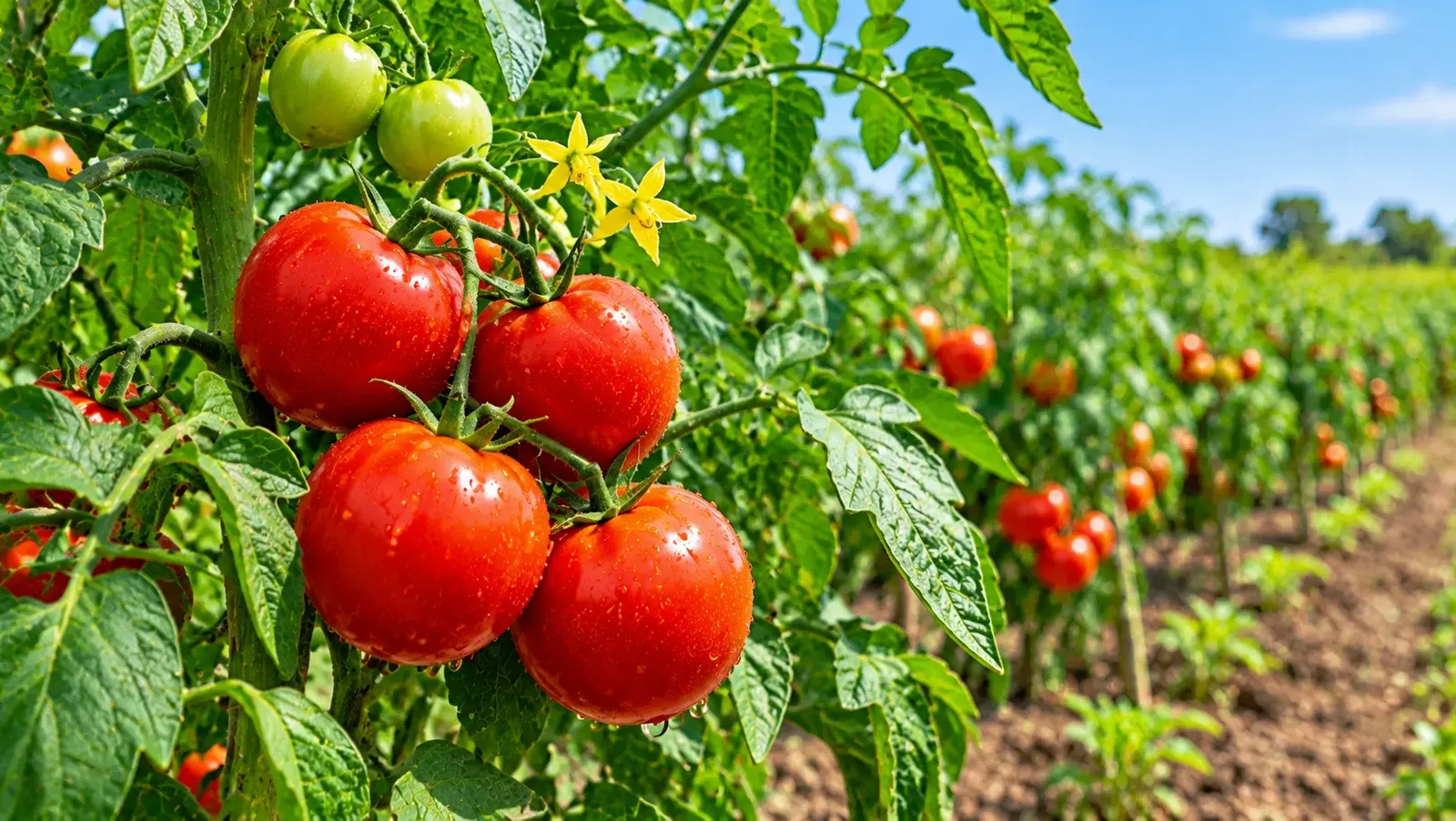
Tomato is a warm-season crop that grows for about 90 to 150 days. ICAR-IIHR notes that in the mild southern climate three crops are possible in a year, with transplanting in June-July, October-November and February-March, and that October-November transplanting gives the best yield and quality. That is why rabi is the main crop in the Chittoor-Madanapalle belt and the Rangareddy-Vikarabad-Medak belt around Hyderabad, followed by a summer crop. A day temperature near 28 degrees C and a night near 18 degrees C suit the crop best. Heavy rain raises fruit rot, and summer heat raises the sucking pests that spread viruses.
Soil and land preparation
Choose well-drained, deep, fertile loamy soil with pH 6.0 to 7.0. Waterlogged plots invite bacterial wilt, so avoid low-lying fields.
Rotate with a cereal crop (paddy, maize, jowar) to break soil-borne disease build-up.
Plough or chisel 30 to 45 cm deep, break clods and work in about 25 tonnes of well-decomposed FYM per hectare before the final tilth.
Raised beds 80 to 120 cm wide with 40 to 50 cm paths suit drip, fertigation and mulching. Silver-black plastic mulch of 25 to 30 micron controls weeds, holds moisture and cuts pest and disease pressure.
Nursery: 20 to 30 days
Raise seedlings in 98-cell protrays filled with sterilised cocopeat inside a 40-mesh net house. This gives uniform seedlings with far less virus infection. The ICAR Andhra Pradesh advisory also asks farmers to raise the nursery in protrays to avoid damping-off. Seed requirement is about 75 to 100 g per hectare for hybrids and 200 to 250 g for open-pollinated varieties (roughly 60 to 80 g per acre for hybrids). Seedlings are ready in 20 to 25 days; the ICAR Telangana advisory transplants at 21 to 30 days. Harden them by reducing water and shade in the last few days, and if you buy seedlings, take only stocky ones free of leaf curl.
Transplanting and establishment
Transplant hardened seedlings in the late afternoon into 3-inch deep holes and irrigate the furrow immediately. ICAR-IIHR suggests rows 100 to 120 cm apart with plants 60 to 75 cm apart for hybrids, and 100 x 50 cm for varieties; the Telangana advisory uses 75 x 30 cm. Apply full phosphorus and potash and part of the nitrogen as basal, as per your soil test, and drench the roots with a certified bio-fertiliser consortium about 12 days after transplanting. Fill gaps within a week and keep the soil evenly moist but never flooded.
 AJ Bho AuxinView details
AJ Bho-Auxin is a concentrated growth booster with seaweed extract, humic and fulvic acid, amino acids and vitamins. It fits the establishment stage of transplant shock or heat; use as per label.
Staking, earthing up and weeding
Stake with bamboo, casuarina or eucalyptus poles and GI wire, tying plants as they grow; ICAR-IIHR notes staking makes plant protection and harvesting easier and improves yield and quality. In the ridge-and-furrow method, do earthing up along with the nitrogen side dressing at four weeks after transplanting. Keep the field weed-free for the first 45 days, by hand or with mulch.
Irrigation
With drip, run the system daily for 20 to 40 minutes depending on stage, season and emitter discharge, and check water EC before installing.
Without drip, irrigate every 5 to 6 days for the early (summer) planting and every 10 to 15 days for the main rabi crop; the ICAR Karnataka advisory suggests once in 5 to 7 days based on soil moisture and weather.
Avoid over-irrigation and dry-wet swings; both invite disorders such as blossom-end rot.
Flowering and fruit set
Flowering begins around four weeks after transplanting. Split the remaining nitrogen and potash at 4 and 8 to 9 weeks after transplanting. From about 45 days, ICAR-IIHR recommends a micronutrient foliar spray two or three times at 10 to 15 day intervals if deficiency symptoms appear, and a potassium-rich foliar feed during fruit development to improve fruit size and colour. For pests, monitor with traps, grow a marigold row every 16 tomato rows and a maize or bajra border, and for any spray follow the label and your local agriculture officer or ANGRAU / PJTSAU recommendation.
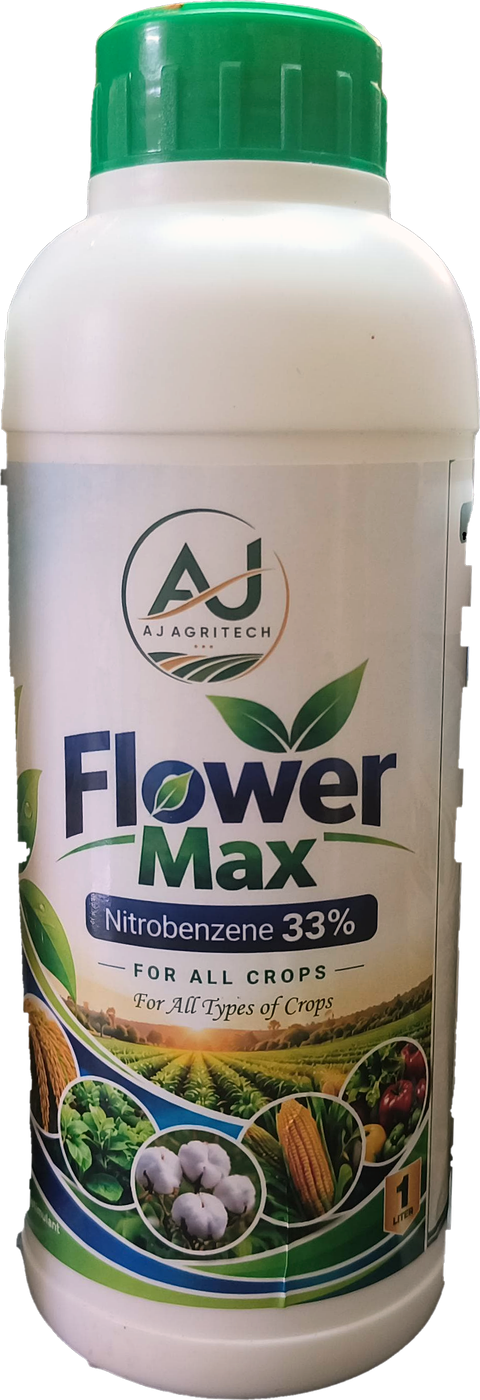 AJ Flower MaxView details
AJ Flower Max is a flowering booster for the flowering stage of the crop; apply as per label when the first flower clusters open.
Harvest
Fruits are ready from about 60 to 65 days after transplanting. For distant markets pick at the colour-breaker stage, when the fruit turns pink, every 3 to 4 days. Harvest in the cool morning hours, keep fruit in shade and move it in plastic crates or wooden boxes to cut bruising. ICAR-IIHR puts the yield potential at 35 to 40 t/ha for varieties and 70 to 80 t/ha for hybrids.
Quick checklist
Transplant in October-November for the main rabi crop; well-drained loamy soil, pH 6 to 7.
Protray nursery in a net house; transplant hardened 20 to 30 day seedlings in the evening.
25 t/ha FYM, raised beds, silver-black mulch, soil-test based fertiliser.
Stake with poles and GI wire; earth up and side-dress nitrogen at 4 weeks.
Weed-free for 45 days; drip daily or furrow irrigation every 5 to 15 days by season.
Micronutrient and potassium foliar feeds from 45 days only on symptoms.
Pick at breaker stage every 3 to 4 days, in cool hours, in crates.
Sources
Production technologies: Tomato (Solanum lycopersicum L.) — ICAR-Indian Institute of Horticultural Research, Bengaluru
ICAR Kharif Agro-Advisories for Farmers 2025 (Andhra Pradesh, Telangana and Karnataka sections) — Indian Council of Agricultural Research, New Delhi