
Chilli · Fruiting
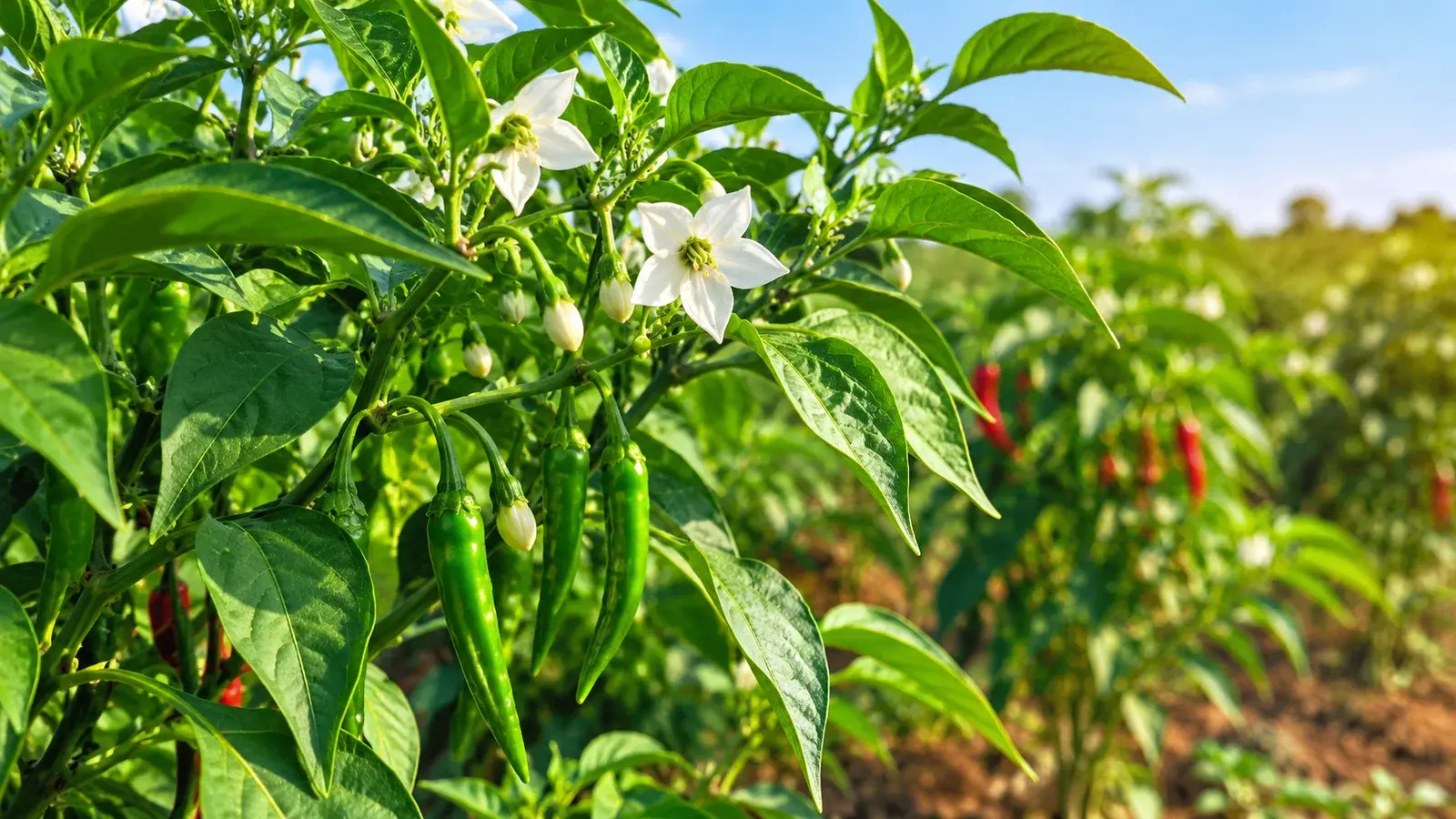
Chilli Flower Drop and Poor Fruit Set: Causes and What You Can Do
First, understand what is happening
In the Government of India booklet on chilli thrips hosted by ICAR-IIHR, the flower drop section is short and clear: flower drop "is influenced by the climatic conditions and moisture level in the soil", and severe pest infestation such as thrips can also cause it. ICAR-IISR adds that excess irrigation or rainfall and poor drainage hurt the crop, and that thrips and mites are the pests farmers fight most. So when you see a carpet of dropped flowers under the plants, think in four groups: weather, water, nutrition and pests. Usually more than one is at work.
Cause 1: Weather stress
Chilli flowers in Guntur, Palnadu and Khammam from September into the cooler months. A hot dry spell after the rains stop, or a long cloudy wet spell, both count as climatic stress in the DPPQS booklet. You cannot change the weather, but you can soften its effect on the plant: keep soil moisture steady (see below), keep the plant turgid, and avoid any extra stress such as heavy nitrogen or a chemical cocktail in the same week. Mulching, which the ICAR 2025 kharif advisory recommends for chilli, keeps the root zone cooler and moister during such spells.
Cause 2: Water, too little or too much
Too little: The DPPQS booklet asks for irrigation when 40-60 percent of the available soil moisture has been used, and supplemental irrigation at critical stages in a drought. Flowering is one such stage. Adequate moisture keeps cells turgid; a wilting plant sheds flowers first.
Too much: Fields that stay waterlogged suffer more from pests and diseases. ICAR-IISR advises avoiding water stagnation and providing proper drainage. Raised beds with furrows, as recommended for chilli, let heavy October rain drain out within hours.
Practical rule: Do not let the crop swing between flooding and drought. Light, regular irrigation is better than one heavy soaking after a long gap, and never irrigate just before a forecast heavy rain.
Cause 3: Nutrition imbalance
Too much nitrogen makes the plant soft and leafy and, as the booklet notes, attractive to pests; it also delays and weakens fruit set. Keep nitrogen balanced, apply all phosphorus as basal and give enough potash, which the booklet links to plant resistance. Micronutrients matter at this stage: ANGRAU's KVK Garikapadu in Krishna district reported that foliar spray of micronutrients resulted in less flower and fruit drop and higher yields in chilli, and the ICAR 2025 kharif advisory lists boron sprays to improve fruit setting and reduce flower and immature fruit drop, along with a micronutrient mix during vegetative and flowering stages. Use a water-soluble micronutrient spray with zinc, iron, manganese, boron and magnesium as per label, after your AO confirms the deficiency.
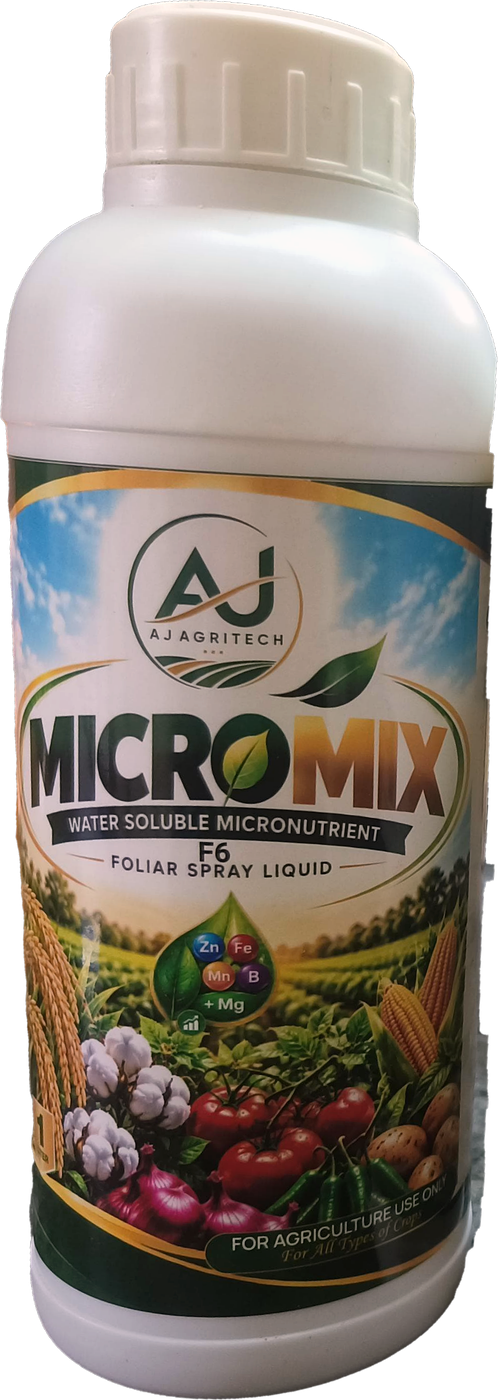 AJ Micromix F6View details
Cause 4: Thrips, mites and virus
Thrips feed on growing points and flowers. The DPPQS booklet says heavy infestation reduces fruit set and development and causes flower drop in severely infested fields.
Mites curl the leaves and weaken the plant; ICAR-IISR lists yellow mite among the main chilli pests.
Sucking pests also carry viruses: ICAR-IISR notes aphids transmit cucumber mosaic and thrips transmit peanut bud necrosis virus. A virus-hit plant flowers poorly.
Monitor with sticky traps from the nursery onwards, nip and destroy badly infested shoot tips, and for control follow the label and your local agriculture officer or ANGRAU / PJTSAU recommendation. Do not tank-mix several products.
Cause 5: Crowding and poor field hygiene
Close spacing favours thrips multiplication, so stick to 60 x 30 cm or 45 x 45 cm. Weeds such as Parthenium, Cleome, Lantana, Abutilon and wild Solanum on the bunds act as off-season hosts for thrips. Intercultivation every 15-20 days disturbs thrips pupae in the soil, and two or three border rows of sorghum, maize or bajra slow thrips moving in from neighbouring fields.
What you can do this week
Walk the field in the morning: check soil moisture at root depth, look for thrips in open flowers and curled leaves, and note where flowers are dropping most (wet corners, dry edges, or everywhere).
Fix water first: irrigate lightly if the soil is dry below 40-60 percent moisture; open furrows and drain if water is standing.
Stop extra nitrogen for now; give potash as per recommendation.
Spray a micronutrient mix as per label if deficiency symptoms are present.
Install or renew sticky traps; remove weeds from bunds.
If thrips or mites are above the level your AO considers damaging, use only the recommended product as per label.
A flowering-stage booster can support the plant through this phase; use it as per label.
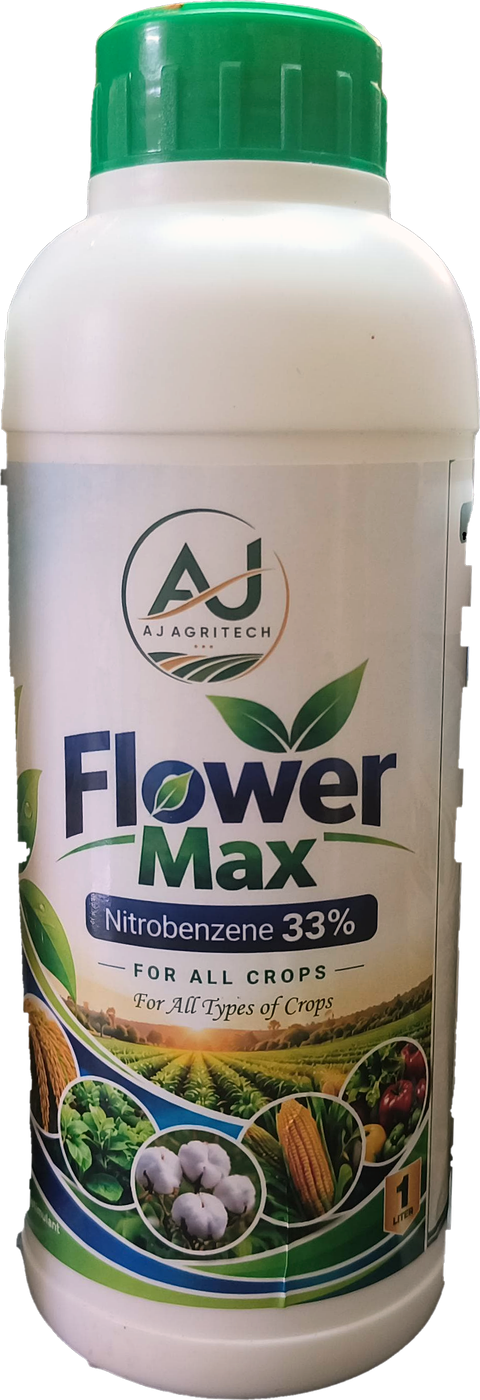 AJ Flower MaxView details
Plant growth regulators are listed for flower drop in the DPPQS and ICAR advisories; if you use one, follow the label and your AO's advice on timing, and spray in the cooler part of the day. Avoid tonics of unknown composition, which ICAR-IISR specifically warns against.
Quick checklist
Keep soil moisture even: irrigate at 40-60 percent depletion, drain within hours after heavy rain.
No excess nitrogen during flowering; adequate potash.
Foliar micronutrients (Zn, Fe, Mn, B, Mg) as per label when deficiency shows.
Sticky traps and weekly scouting for thrips and mites.
Weed-free bunds, border rows of sorghum or maize, intercultivation every 15-20 days.
Recommended spacing; no crowding.
Pest control strictly per label and AO / ANGRAU / PJTSAU; no cocktails, no unknown tonics.
Sources
Monitoring, Diagnosis and Management of South East Asian Thrips, Thrips parvispinus in Chilli (June 2022) — Directorate of Plant Protection, Quarantine & Storage, Govt of India (hosted by ICAR-IIHR)
Chilli - Good Agricultural Practices (September 2019) — ICAR-Indian Institute of Spices Research / Spices Board India
An Overview on Dr. K.L. Rao Krishi Vigyan Kendra, Garikapadu, Krishna District — ANGRAU / ICAR KVK Garikapadu
ICAR Kharif Agro-Advisories for Farmers 2025 — Indian Council of Agricultural Research, New Delhi