
Groundnut
Gypsum for Groundnut at Pegging: Why Calcium Matters, When and How to Apply
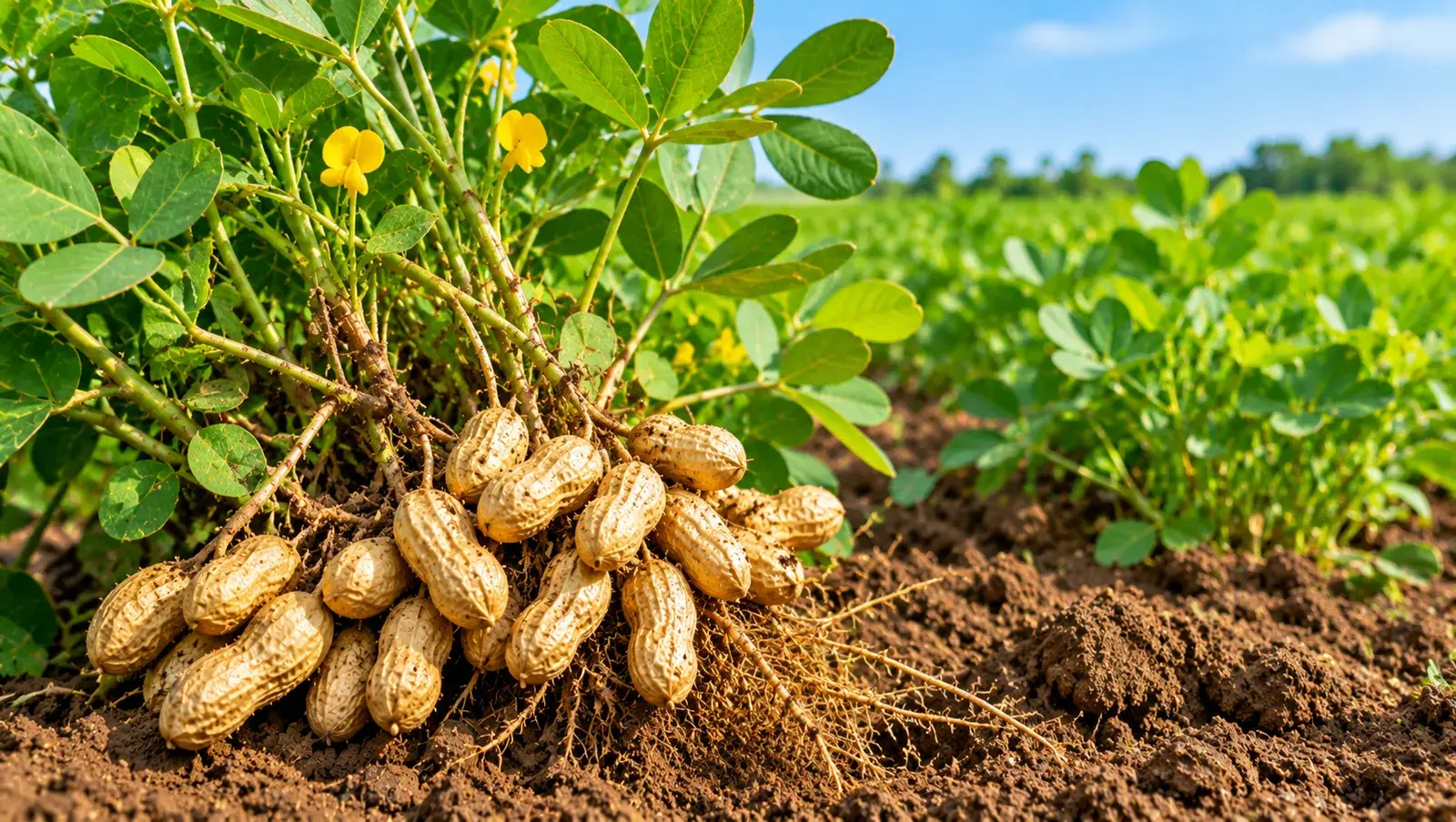
Why groundnut needs calcium in the pod zone
Groundnut is unusual: after the flower is pollinated, a peg grows down from the plant and the pod forms underground. The developing pod cannot wait for calcium to travel from the roots; it absorbs calcium directly from the soil touching it. The ICAR-DGR technical bulletin states that "the availability of Ca in the fruiting zone must exceed a defined critical level during the time of pod development". The NRCG farmer's manual adds that the calcium requirement is greater for pod filling than for flowering, and greater for flowering than for vegetative growth, and reports that the average worldwide yield increase from applying calcium in the pegging zone is 24 per cent. When calcium is short in the top few centimetres, pegs form but pods stay empty (pops) or shells are thin and kernels shrivelled. Each tonne of pods also removes about 27 kg of CaO from the field, so the pod zone gets depleted season after season in the sandy red soils of Anantapur, Kurnool, Nalgonda and Mahabubnagar.
Why gypsum and not lime
Gypsum is calcium sulphate. It supplies both calcium and sulphur, and the NRCG manual notes its moderate solubility releases the two nutrients in step with the crop's critical stages. Sulphur matters for oil content. NRCG also makes the soil distinction clear: on acid soils liming is the answer, while on neutral and alkaline soils, which is what most of our groundnut belt has, gypsum is applied. It does not raise soil pH the way lime does, so it is safe on our red and black soils.
When to apply: the flowering-to-pegging window
The ICAR-DGR package of practices for Andhra Pradesh recommends gypsum at 500 kg per hectare (200 kg per acre) applied at the flowering stage by placement.
The same ICAR-DGR package for Karnataka and the ICAR 2025 advisory for Telangana word it as 500 kg per hectare at the pegging stage near the podding zone, to enhance pod formation.
Flowering runs from about 20 to 40 days after sowing and pegs start entering the soil around day 40, so in practice the window is roughly 30 to 45 days after sowing, at peak flowering, just before pegs go down. Do not wait until pods are already forming.
Some states split the dose, half at sowing and half at 30 to 35 days, and the technical bulletin notes 250 kg per hectare is sufficient on soils that are only mildly short of calcium and sulphur. Follow your soil test and the local agriculture officer or ANGRAU / PJTSAU recommendation for the exact dose.
How to apply
Use well-powdered agricultural-grade gypsum and apply it when the soil is moist, or just before an irrigation or an expected rain, so it dissolves into the top layer.
Place it in a band along both sides of the plant rows, over the zone where pegs will enter, and work it in shallowly, about 5 to 10 cm deep, with the last light inter-cultivation or earthing-up. NRCG stresses that for effective absorption gypsum must be applied in the soil near the pod zone.
Finish this before pegs start going down, because once pegging begins (around 40 days) the rows should not be disturbed.
In heavy-rainfall spells NRCG warns that gypsum can be leached below the pegging zone, so in a wet kharif avoid applying just before a forecast heavy downpour.
Gypsum is a soil amendment, not a substitute for the basal fertiliser; apply the soil-test based NPK and FYM as usual.
What to watch after application
Gypsum has side benefits and a few cautions. NRCG notes that during drought, calcium, potassium and sulphur applications are beneficial and that gypsum helps drought management by delaying wilting and leaf senescence, which is valuable in a rainfed kharif. ICAR research also found that 500 kg per hectare of gypsum at pegging significantly reduced aflatoxin contamination in pods. On the caution side, NRCG points out that excess calcium can induce magnesium or potassium deficiency and that in calcareous soils high calcium lowers the availability of manganese, iron, zinc, copper and boron, with lime-induced iron chlorosis the main problem. So after gypsum, scout the field at 50 to 60 days: yellowing between the veins of young leaves means iron or zinc shortage, which the AP package corrects with a ferrous sulphate and citric acid spray or zinc sulphate soil application.
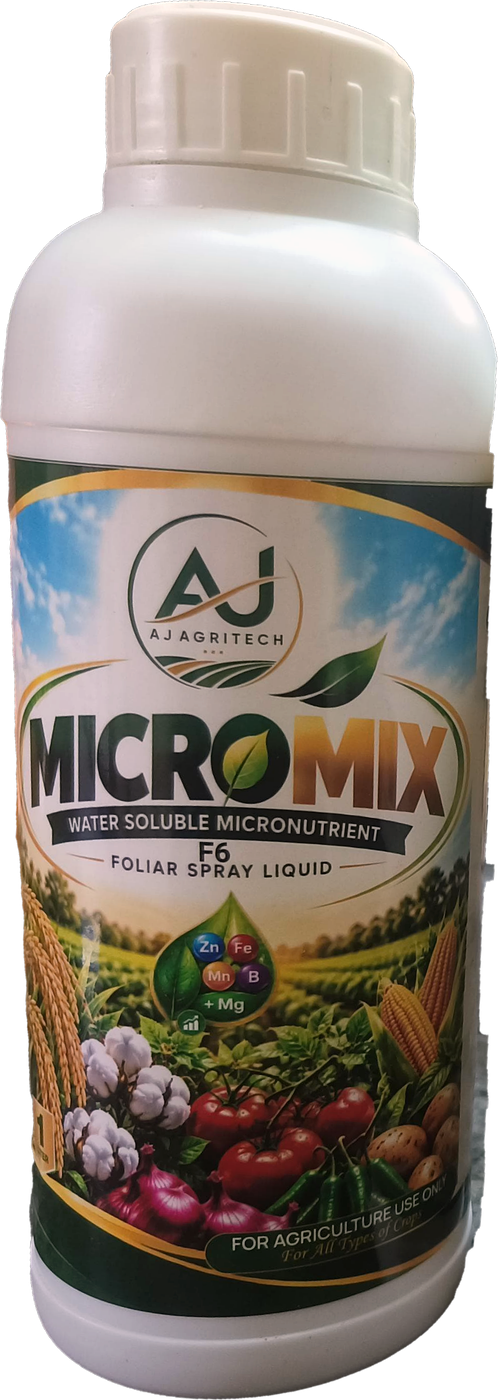 AJ Micromix F6View details
AJ Micromix F6 is a water-soluble micronutrient foliar spray with Zn, Fe, Mn, B and Mg. It fits fields that show micronutrient deficiency symptoms after pegging; apply as per label. It does not supply calcium and is not a replacement for gypsum.
Quick checklist
Pods absorb calcium from the soil around them; short calcium at pegging gives pops and thin shells.
Dose: 500 kg gypsum per hectare (200 kg per acre) as per ICAR-DGR; 250 kg where soil test shows only mild shortage.
Time: peak flowering, 30 to 45 days after sowing, before pegs enter the soil.
Method: band along rows over the pod zone, mix 5 to 10 cm deep with the last inter-cultivation, when soil is moist.
Do not disturb rows after 40 days; avoid applying before a heavy downpour.
Gypsum is extra to, not instead of, the soil-test NPK and FYM.
Scout at 50 to 60 days for iron or zinc chlorosis and correct it.
Sources
Package of practices (PoP's) of groundnut for different states — ICAR-Directorate of Groundnut Research, Junagadh
Technologies to Enhance Groundnut Productivity - Technical Bulletin — Directorate of Groundnut Research (ICAR), Junagadh
Integrated nutrient management in groundnut - A Farmer's Manual (A.L. Singh and M.S. Basu, 2005) — National Research Centre for Groundnut (ICAR), Junagadh
ICAR Kharif Agro-Advisories for Farmers 2025 (Telangana groundnut section) — Indian Council of Agricultural Research, New Delhi
DARE/ICAR Annual Report 2007-08, Crop Management (groundnut aflatoxin) — Indian Council of Agricultural Research, New Delhi