
Maize
Maize stage-wise care guide: sowing to harvest for kharif and rabi crops in Telangana and Andhra Pradesh

Maize is grown in both kharif and rabi across Telangana and Andhra Pradesh, and the rabi crop under irrigation often gives the higher yield. The crop has a few make-or-break moments: sowing time, the stand you achieve, the knee-high top dressing and water at tasseling and silking. This guide walks through each stage using the ANGRAU maize package of practices, ICAR-IIMR production technology and the ICAR 2025 kharif advisories.
Sowing window and field preparation
ANGRAU's package sets the kharif sowing window at 15 June to 15 July; if the monsoon is late, sowing can go up to the first week of August with short-duration hybrids under assured irrigation. For rabi, the window is 15 October to 15 November in Telangana and Rayalaseema, and up to the first week of January in the coastal districts. The ICAR 2025 advisory for Telangana adds two practical rules: sow only after a cumulative rain of 50-60 mm, and finish sowing in a village within about a week so that fall armyworm does not keep finding young crop.
Choose red sandy loam to medium black soil with good drainage. ICAR-IIMR warns that maize is very sensitive to waterlogging and that stagnation for more than two days causes heavy loss. A deep summer ploughing destroys pests and conserves moisture; follow it with harrowing so the seedbed is fine and level. Sowing on the side of ridges, about a third of the way down from the top, helps both irrigation and drainage.
Sowing and plant stand
Spacing of 60 cm between rows and 20 cm between plants gives about 33,333 plants per acre; 75 x 20 cm suits tractor-drawn intercultivation.
Sow at 3.5-5 cm depth. Thin to one seedling per hill about 10 days after emergence.
Apply the full phosphorus and potash and the first share of nitrogen at sowing; where soils are known to be zinc deficient, ANGRAU recommends zinc sulphate at sowing as per soil test.
In kharif, raised beds or ridges protect the crop from waterlogging; ICAR-IIMR suggests east-west ridges with seed placed on the southern side.
Intercropping with redgram (2:1 in light soils, 4:1 in heavy soils) is recommended in the Telangana advisory and also lowers fall armyworm pressure.
Seedling to knee-high (first 30-35 days)
Weeds hurt most in this window. ICAR-IIMR puts the critical period of crop-weed competition at 15-45 days after sowing and ANGRAU asks for the crop to be kept weed-free up to 45 days. Two hoeings at about 15 and 30 days, followed by intercultivation and earthing up at 30-35 days, keep the field clean and the plants anchored against lodging. Keep drains open; a heavy early shower should run off the field the same day.
Knee-high stage, roughly 30-35 days after sowing, is the first nitrogen top-dressing point in both ANGRAU and ICAR-IIMR schedules. In kharif, time the top dressing with a rain. ICAR-IIMR also lists a micronutrient spray at knee-high and notes that zinc-hungry maize shows stunted plants with short internodes and pale, whitish tissue with reddish veins on the leaf blade. A water-soluble foliar micronutrient mix with zinc, iron, manganese, boron and magnesium can be used at this stage as per label.
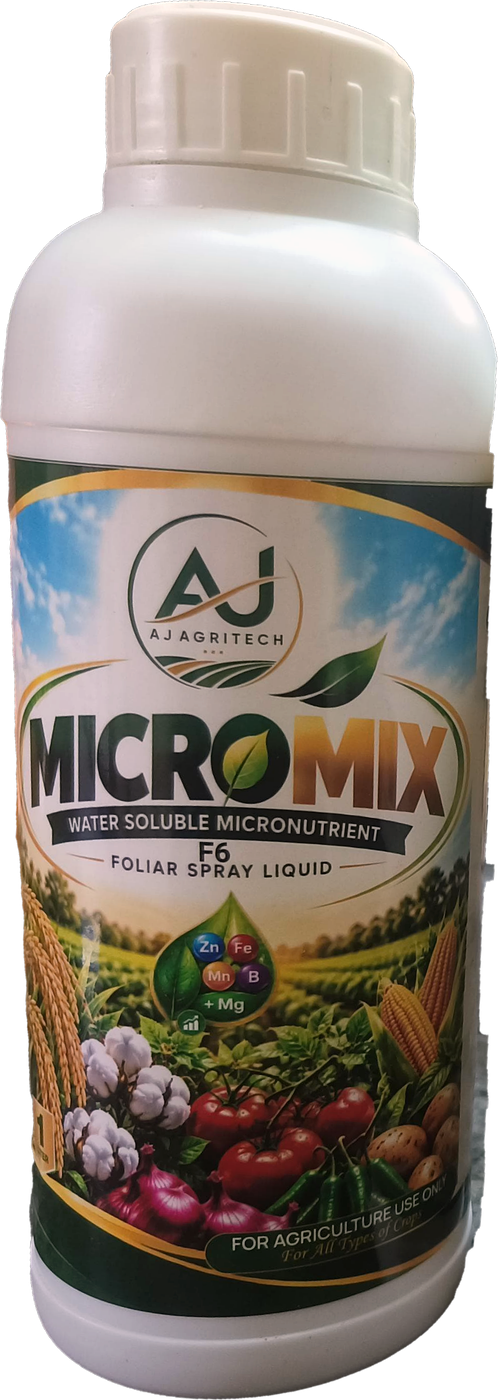 AJ Micromix F6View details
Knee-high to tasseling
For rabi maize, ANGRAU recommends four nitrogen splits: sowing, knee-high (30-35 days), flag-leaf emergence (50-55 days) and tasseling-silking (60-65 days). The kharif crop gets three splits: sowing, knee-high and flowering.
Irrigate so the crop never wilts in the afternoon; the crop needs 500-800 mm in a season and ICAR-IIMR asks for adequate moisture at pre-tasseling in particular.
In ridge-sown fields, fill the furrow to about two-thirds of the ridge height.
Scout the whorls every week for fall armyworm and stem borer; for any pest or disease, follow the label and your local agriculture officer or ANGRAU / PJTSAU recommendation.
Tasseling, silking and grain filling
This is the stage where water stress costs the most grain. ANGRAU lists irrigation at silking, milky and dough stages among its critical interventions, and for the rabi crop suggests four to six irrigations with two of them after flowering and one at early grain filling. If only four irrigations are possible, ANGRAU says to skip one in the vegetative stage rather than at flowering. Even a rainfed kharif crop should be irrigated at flowering if a dry spell hits.
Avoid any intercultivation after flowering so that lateral roots are not damaged, and keep the field free of waterlogging during grain filling. A flowering-stage booster may be used as per label.
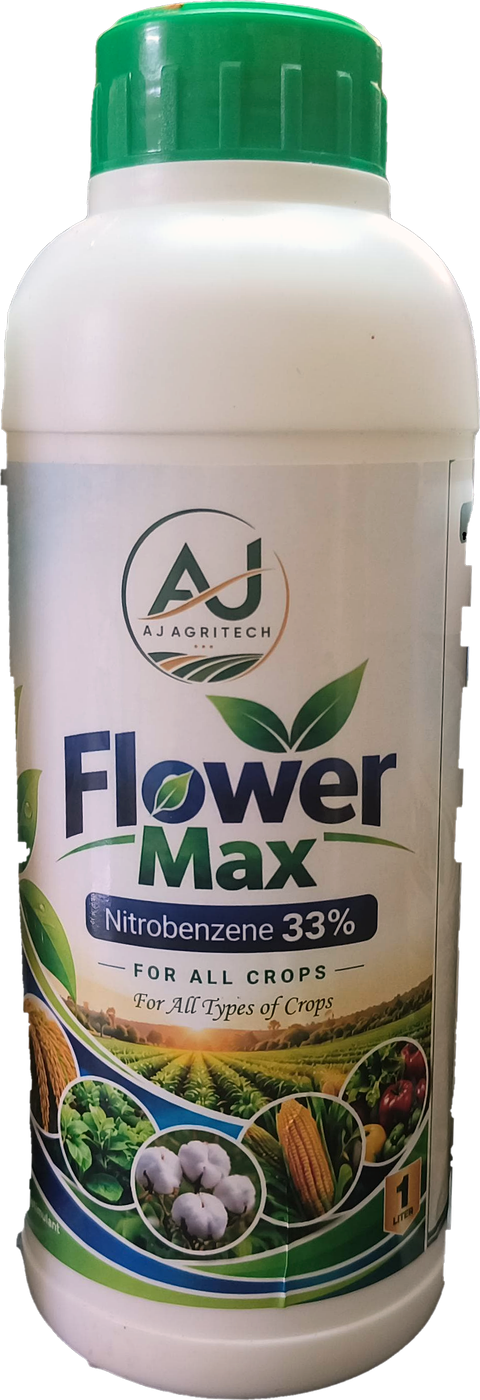 AJ Flower MaxView details
Harvest and storage
Harvest when the husk has dried and turned brown.
Shell with a maize sheller or thresher after the cobs are dry.
Sun-dry cobs and grain to below 14 percent moisture before storage or sale; ICAR-IIMR notes that wetter grain fetches a lower price and risks aflatoxin.
Remove stubble and rotate crops where late wilt or charcoal rot has been a problem.
Quick checklist
Sow 15 June-15 July (kharif) or 15 October-15 November (rabi); after 50-60 mm rain in kharif.
Deep summer ploughing, ridges or raised beds, good drainage.
60 x 20 cm spacing, one plant per hill, thin at 10 days.
Weed-free up to 45 days; earth up at 30-35 days.
Nitrogen at sowing, knee-high and tasseling (plus flag-leaf in rabi).
Never let the crop go dry at tasseling, silking and grain filling.
Harvest at brown husk; dry to below 14 percent moisture.
Sources
Maize (Zea mays L.) Package of Practices (Kharif and Rabi) — ANGRAU, Regional Agricultural Research Station, Tirupati
Production Technology (Grain/QPM kharif and rabi) — ICAR-Indian Institute of Maize Research, Ludhiana
ICAR Kharif Agro-Advisories for Farmers 2025 (Telangana and Andhra Pradesh maize sections) — Indian Council of Agricultural Research, New Delhi