
Paddy
Paddy stage-wise care guide for vanakalam and yasangi in Telangana and Andhra Pradesh

Paddy gives its best when each growth stage gets the right water, nutrition and timing. This guide follows the crop from nursery to harvest using the recommendations of ANGRAU, ICAR and the state agromet units for Telangana and the Krishna and Godavari zones of Andhra Pradesh.
Know your season and sowing window
For vanakalam (kharif) in Telangana, the ICAR 2025 kharif advisory asks farmers with assured irrigation to raise nurseries of long-duration varieties (140-145 days) between 20 May and 20 June, and medium (130-135 days) or short-duration (120-125 days) varieties from 20 June onwards. Where canal or tank water arrives late, it suggests a green gram catch crop or green manuring with dhaincha, crotalaria or pillipesara, turned in before flowering.
In Andhra Pradesh the same advisory lists separate variety choices for the Krishna zone (Guntur, Krishna, Bapatla, NTR, Palnadu, Prakasam) and the Godavari zone (East and West Godavari, Kakinada, Konaseema, Eluru), with special lists for late-nursery, flood-prone, BPH-prone, saline and drought-prone fields. Ask your mandal agriculture officer which list fits your village.
For yasangi (rabi), ANGRAU's RARS Tirupati package starts rabi nurseries from the first fortnight of November and recommends younger seedlings (20-25 days) than in kharif.
Nursery stage
Choose a nursery plot with good irrigation and drainage. Prepare raised beds about one metre wide with channels between them.
Soak seed for 16-24 hours and incubate for 24-36 hours before broadcasting the sprouted seed in a thin film of water; drain the water the next morning so the bed breathes.
Keep the bed alternately wet and dry in the first week, then hold 2-3 cm of water depending on seedling height.
Flood the nursery two days before pulling so roots come out without tearing.
Transplanting
Plough once or twice in summer, start puddling at least 15 days before planting and level the field well. ANGRAU recommends transplanting 30-day-old seedlings in kharif and 20-25-day-old seedlings in rabi, with 2-3 seedlings per hill at 2-3 cm depth. Over-aged seedlings cut yield sharply: avoid seedlings older than 30 days for short-duration, 40 days for medium and 60 days for long-duration varieties. Plant about 33 hills per square metre in kharif and 44 in rabi or in less fertile soils.
Leave a 20 cm alleyway every 2 metres; both the Telangana advisory and ANGRAU recommend this for aeration, easy fertiliser application and better pest management. Apply the full phosphorus dose at final puddling; in light soils split potash, half at puddling and half at panicle initiation. Keep 1-2 cm of water at transplanting and raise it to about 5 cm until the crop establishes.
 AJ Bho AuxinView details
Tillering stage
Hold shallow water (2-3 cm) through tillering; too much standing water reduces tillers.
Keep the field weed-free up to 45 days after transplanting, with hand weeding at 20 and 40 days where labour is available.
Give the first nitrogen top dressing at active tillering. Drain the field before top dressing and irrigate again after two days.
In well-irrigated areas, the Telangana advisory recommends alternate wetting and drying, which saves water, improves aeration and lowers brown planthopper build-up.
Panicle initiation
This is the second top-dressing point for nitrogen and, in light soils, the time for the second half of potash. From panicle initiation raise the water to 5 cm and keep it there up to physiological maturity. ANGRAU is clear that the crop "should not face water stress at panicle initiation, flowering and milk stages".
Flowering and grain filling
Keep water steady and drain excess quickly after heavy rain. The IMD Visakhapatnam agromet bulletin for early November 2026, when the kharif crop in coastal districts was at panicle initiation to flowering, advised 5-10 cm of water in rice fields and draining excess water after rain. The ICAR advisory warns that submergence for more than one or two days at boot-leaf or flowering can leave panicles half-emerged and grains chaffy.
Watch for sheath blight, blast, leaf folder and brown planthopper at this stage. For any pest or disease, follow the label and your local agriculture officer or ANGRAU / PJTSAU recommendation.
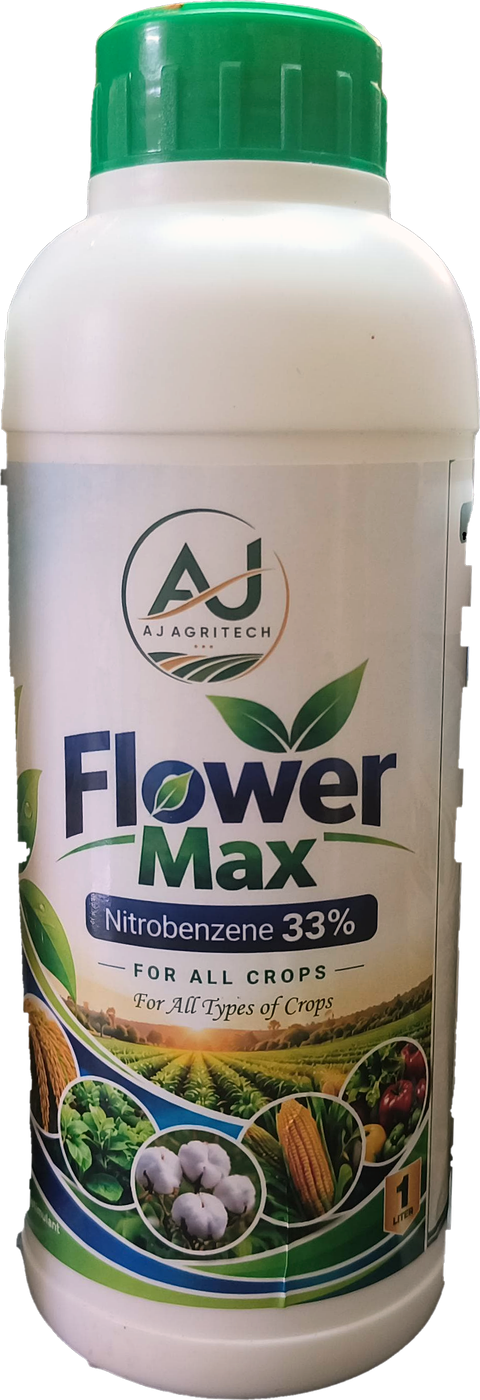 AJ Flower MaxView details
Harvest and drying
Stop irrigation about 10 days before harvest.
Harvest when at least 80 percent of the grains are mature; early harvest gives more brokens in milling.
Let the sheaves dry in the field for 2-3 days, then thresh, winnow and sun-dry slowly to below 13 percent moisture.
Avoid both over-drying and under-drying; both cause breakage in the mill.
Quick checklist
Nursery: raised beds, sprouted seed, drain next morning, alternate wet and dry in week one.
Transplant 30-day seedlings in kharif, 20-25 days in rabi; 2-3 seedlings per hill, shallow.
Alleyways of 20 cm every 2 metres.
Water: 2-3 cm in tillering, 5 cm from panicle initiation to maturity.
Nitrogen in three splits: basal, active tillering, panicle initiation.
Drain excess water within a day after heavy rain.
Harvest at 80 percent grain maturity, dry to under 13 percent moisture.
Sources
ICAR Kharif Agro-Advisories for Farmers 2025 (Andhra Pradesh and Telangana sections) — Indian Council of Agricultural Research, New Delhi
Recommendations for Rice Crop Production and Package of Practices for Kharif and Rabi — ANGRAU, Regional Agricultural Research Station, Tirupati
Agromet Advisory Service Bulletin for the State of Andhra Pradesh, Bulletin No. 89/2026 (06.11.2026) — India Meteorological Department, State Agro-Meteorological Centre, Visakhapatnam (with AMFUs of ANGRAU)