
Paddy
Zinc deficiency (khaira) in paddy: symptoms, soils at risk and what ANGRAU and ICAR recommend

Zinc deficiency, known in rice as khaira, is one of the most common nutrient problems in transplanted paddy in Telangana and Andhra Pradesh. It shows up early, is easy to mistake for a disease or water trouble, and quietly cuts tillering and yield. Here is how to recognise it and what the research institutions recommend.
What khaira looks like
According to the ICAR Indian Farming review on zinc in rice, symptoms appear on the second or third leaf from the top about two to three weeks after transplanting. The leaves develop brown blotches and streaks that join up and can cover the older leaves. The ICAR-CCARI rice guide adds that the midribs turn pale, especially near the base of younger leaves, and that stunted plants show dusty brown spots on the upper leaves.
Rusty brown or bronze patches and streaks on leaves, starting with older leaves.
Pale midrib near the base of young leaves.
Hills look stunted and uneven; new leaves are small.
Few tillers; patches of the field stay short while the rest grows.
In a long, severe deficiency the ICAR review notes that plant height, tillering and grain yield all fall and plants can die.
When and where it appears
The timing is the key clue: khaira typically appears in the first month after transplanting, when the roots are still weak and the flooded soil has locked up zinc. ICAR links the problem to high soil pH, which sharply reduces zinc availability, and to years of intensive cereal cropping. The ICAR-CCARI guide notes that zinc deficiency is also seen in saline situations. The ICAR 2025 Telangana advisory specifically asks farmers to manage zinc deficiency "particularly in alkaline soils".
In practice, watch your field closely if you have black or alkaline soil, if you grow paddy after paddy every season, if the field has been continuously flooded since transplanting, or if your soil test shows low available zinc.
Do not confuse it with other problems
Nitrogen deficiency yellows older leaves from the tip in a V shape and the whole plant turns pale green, without the brown blotches. Iron deficiency shows yellowing between the veins of the youngest, emerging leaves. Sulphur deficiency also starts on young leaves. Khaira is different: brown, rusty patches on older leaves plus stunting in the first weeks after planting. If in doubt, take a soil and plant sample to your agriculture officer or the nearest ANGRAU or PJTSAU research station.
What the universities recommend
Soil application: ANGRAU's RARS Tirupati rice package recommends zinc sulphate as a basal application to avoid zinc deficiency, and the ICAR-CCARI guide places it at transplanting. Apply it in the last puddling as per label and your soil-test recommendation.
Foliar spray when symptoms start: ANGRAU states that deficiency in the standing crop can be corrected by spraying zinc sulphate, repeated at a five-day interval depending on severity; the ICAR Telangana advisory also suggests two to three sprays at five-day intervals.
Apply early: the ICAR review stresses that zinc should be given early to prevent initial loss, because the first weeks after transplanting are when the crop suffers most.
Water management: draining the field and letting it aerate for a few days helps roots recover; ANGRAU recommends draining before top dressing and alternate wetting and drying in well-irrigated fields.
Build the soil: organic matter, green manuring and crop diversification are all listed by ICAR as long-term ways to reduce zinc deficiency.
Soil testing: the ICAR advisory asks farmers to follow soil-test-based fertiliser use, so test once in two to three years and keep the report.
A water-soluble micronutrient spray that contains zinc along with iron, manganese, boron and magnesium can be used for foliar correction as per label.
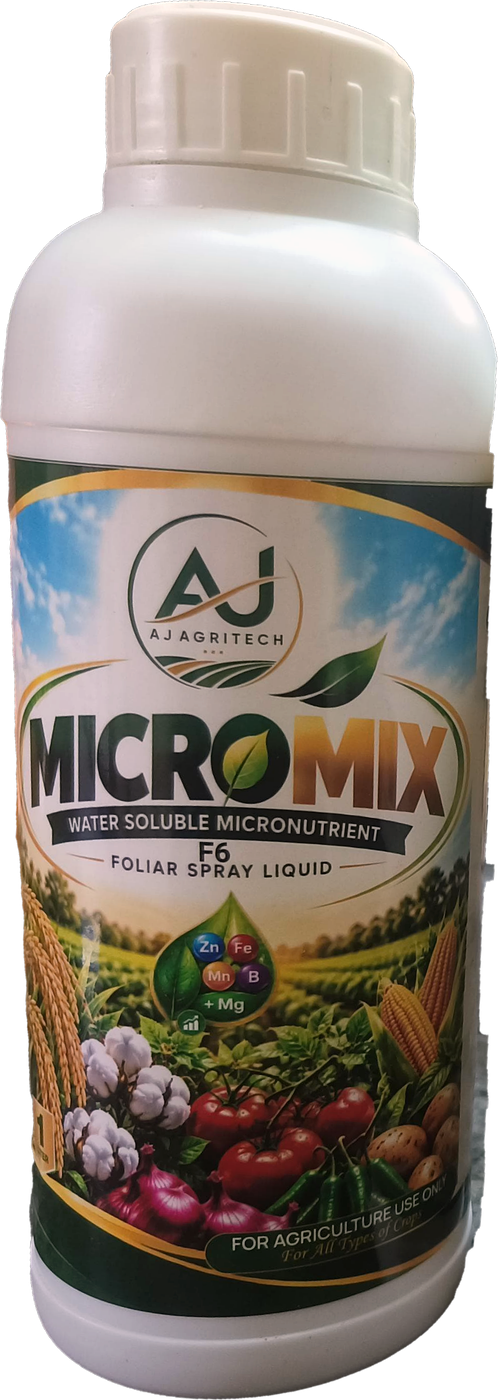 AJ Micromix F6View details
Quick checklist
Walk the field at 15-25 days after transplanting and look for rusty brown patches on older leaves.
Compare short, pale hills with healthy ones; check the midrib of young leaves.
Note your soil: alkaline, black or saline soils and paddy-after-paddy fields are at higher risk.
Apply zinc sulphate in the final puddling where deficiency is known, as per label and soil test.
On symptoms, spray zinc as the universities advise and repeat at the interval they give.
Drain and aerate the field for a few days; do not top dress nitrogen into standing water.
Confirm with a soil and plant test when unsure; do not mistake khaira for iron or nitrogen deficiency.
Sources
Zinc fertilizer application in rice crop: Why, when and how (Indian Farming 73(5), 2023) — ICAR-Indian Institute of Water Management, Bhubaneswar / ICAR e-publications
Decision Support System: Rice - nutrient deficiency symptoms and management (zinc / khaira) — ICAR-Central Coastal Agricultural Research Institute, Goa
Recommendations for Rice Crop Production and Package of Practices for Kharif and Rabi — ANGRAU, Regional Agricultural Research Station, Tirupati
ICAR Kharif Agro-Advisories for Farmers 2025 (Telangana section, paddy) — Indian Council of Agricultural Research, New Delhi