
Vegetables
Raising a healthy vegetable nursery: seedbed and pro-tray method for AP and Telangana growers
Why the nursery decides the crop
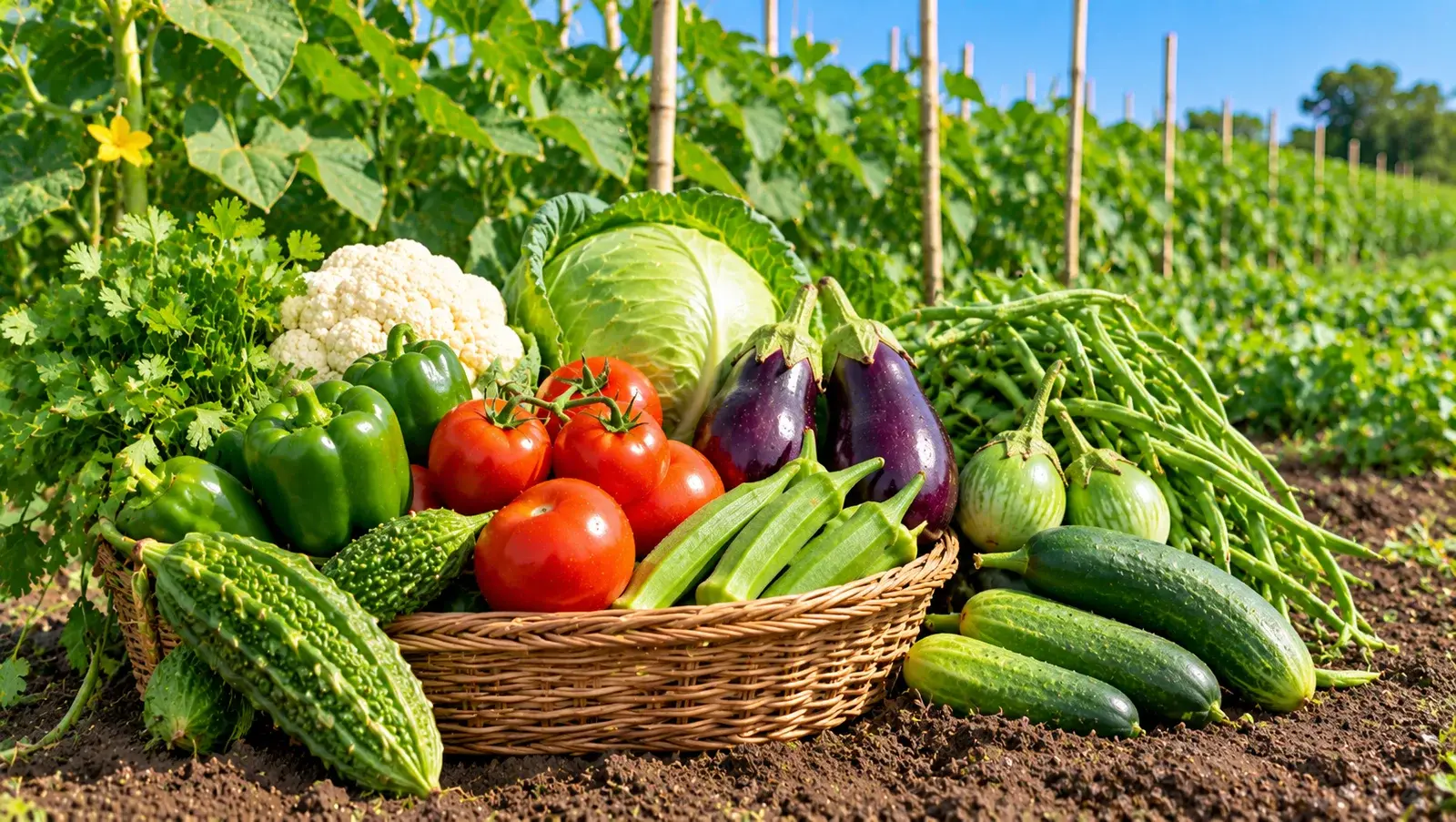
Tomato, brinjal, chilli, capsicum, cabbage and cauliflower all go to the field as transplants. ICAR-IIVR scientists writing in Indian Horticulture put it simply: healthy seeds and seedlings are the first requirement for the full yield of any vegetable crop. In Andhra Pradesh and Telangana most vegetable nurseries are sown in May-June for the kharif crop and in September-October for rabi, with a summer crop sown around January.
Choose the site and prepare the soil
Full-day sunlight, assured water, good drainage and protection from animals and strong wind. Keep the nursery about 50 m from other vegetable fields and away from dusty roads.
Loam to sandy loam soil, loose and rich in organic matter, pH around 7. Plough deep, break clods, remove stones and weeds and level.
Mix 4-5 kg of well-rotted, fine FYM or about 500 g vermicompost per square metre.
Treat the soil before sowing. The simplest method is solarisation: wet the prepared raised beds and cover them with transparent polythene (about 200 gauge) for 5-6 weeks in the hot months, sealing the edges with wet mud. It kills damping-off fungi, nematodes, insect stages and weed seeds in the top 5-6 inches.
ICAR-IIHR advises adding neem, pongamia or castor cake (about 500 g per sq m) before solarisation, watering every 4 days so it decomposes, and allowing 15-20 days before sowing. Bio-agents may be mixed in 2-3 days before sowing as per label.
Seed quantity and bed size
Tomato, chilli, capsicum, cabbage and cauliflower need about 300-400 g of seed and 100-150 sq m of nursery for one hectare of transplanting; brinjal needs 200-300 g. Prepare raised beds 15-20 cm high, 1 m wide and about 3 m long, with 30-45 cm between beds. Raised beds are a must in the rainy season; flat beds only in dry months. Run the bed length north-south and the sowing rows east-west so each row gets sun all day, which lowers damping-off.
Sowing, mulching and watering
Line sowing is best: make lines 0.5 cm deep and 5 cm apart, place seeds 1-2 cm apart and cover with a fine mix of sand, soil and sieved FYM (1:1:2). Water lightly with a rose can.
Mulch with straw until germination to hold moisture and keep off rain splash and birds; remove it in the evening as soon as seedlings emerge.
Water lightly with a rose can until germination, then as the weather demands. Drain excess water at once; waterlogged beds lose seedlings.
Thin to about 1 cm between plants, removing weak, diseased or crowded seedlings, and keep the bed weed-free.
Seed treatment and any nursery spray: follow the label and your local agriculture officer or ANGRAU / PJTSAU recommendation.
Pro-tray method with cocopeat
ICAR-IIHR notes that raising seedlings in trays with cocopeat inside a net house is now the standard method and gives seedlings with less viral infection. For tomato it describes a 40-mesh nylon net cage, steam-sterilised cocopeat and 98-cell trays. The Indian Horticulture article lists 187-cell trays for tomato, brinjal, cucumber and muskmelon and 345-cell trays for cabbage, cauliflower, capsicum and lettuce.
Fill trays with the medium (cocopeat, often with perlite and vermiculite); do not pack the cells tight.
Make a 0.5 cm dent in each cell, place one seed and cover with medium. Cocopeat wetted to 300-400 percent moisture needs no watering until germination.
Stack the trays and cover with polythene to hold moisture; spread them out in the net house as soon as germination starts, or seedlings become lanky.
Water lightly every day with a fine rose; cover with a low polythene tunnel when it rains.
Raw coir pith decomposes unevenly. IIHR's Arka Fermented Coco-peat, made in about 30 days at the nursery, needs no washing or sterilising and can be enriched with its microbial consortium before use.
Hardening and transplant readiness
Hardening is done in the last few days before planting by withholding irrigation and reducing shade so the soft nursery plant can face field sun and wind. Bed-raised seedlings are generally ready in 25-30 days with 5-6 leaves; tray seedlings take 21-42 days depending on the crop, and IIHR gives 20-25 days for tomato. Pull seedlings without tearing roots and transplant bed seedlings in the late afternoon; tray plugs can go in at any time of day because root damage is minimal. Irrigate the furrow right after planting.
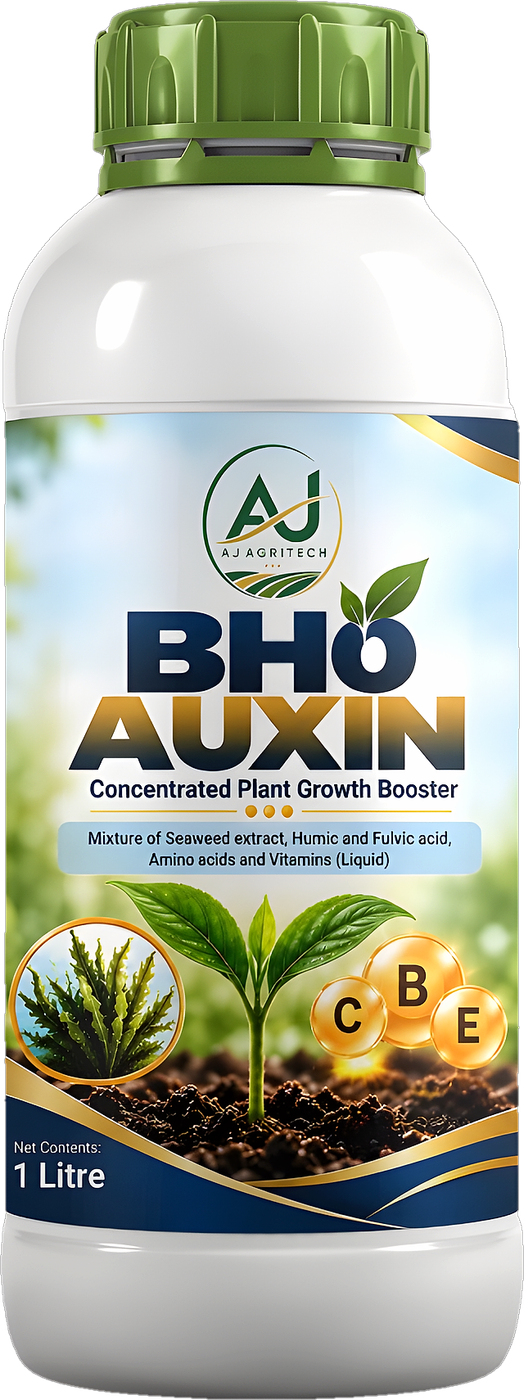 AJ Bho AuxinView details
AJ Bho Auxin, a concentrated growth booster with seaweed extract, humic and fulvic acid, amino acids and vitamins, can be used as per label to support seedlings through hardening and establishment.
Small growers can start small: an ICAR report describes a marginal farmer of Vizianagaram district who raised tomato, brinjal, chilli and papaya seedlings under a 60 sq m mini shade net with KVK guidance.
Quick checklist
Sunny, well-drained site, 50 m from other vegetable fields; raised beds 15-20 cm high, 1 m wide, 3 m long.
4-5 kg FYM per sq m; solarise 5-6 weeks with transparent polythene; oil cake 15-20 days before sowing.
Line sowing 0.5 cm deep, rows 5 cm apart, cover with sand-soil-FYM mix; mulch until germination.
Pro-trays: one seed per cell in cocopeat, stack until germination, then spread in net house.
Harden by cutting water and shade; transplant at 25-30 days (bed) or 21-42 days (tray), tomato 20-25 days.
Seed treatment and sprays only as per label and ANGRAU / PJTSAU or officer advice.
Sources
Nursery management in vegetable crops for enhancing farmers' income, Indian Horticulture (March-April 2023) — ICAR (authors from ICAR-Indian Institute of Vegetable Research, Varanasi)
Production Technology of Arka Fermented Coco-Peat — ICAR-Indian Institute of Horticultural Research (IIHR), Bengaluru
Nematode management in Nursery seedlings of vegetable crops — ICAR-Indian Institute of Horticultural Research (IIHR), Bengaluru
Production technologies: Tomato (Arka Vikas) — ICAR-Indian Institute of Horticultural Research (IIHR), Bengaluru