
Onion
Onion crop care stage by stage: nursery to curing for kharif and rabi
Onion seasons in Andhra Pradesh and Telangana
The ICAR-DOGR calendar for Tamil Nadu, Karnataka and Andhra Pradesh gives kharif sowing in May-June, transplanting in July-August and harvest in October-December; rabi sowing in September-October, transplanting in November-December and harvest in March-April. The Telangana Horticulture Department chart lists onion June-July to October-November (kharif) and December-April (rabi). In the Kurnool, Nalgonda and Rangareddy belts, kharif onion fills the October-December supply gap, while rabi onion stores best.
Onion likes mild weather: DOGR gives 13-24 degrees C for leaf growth and 16-25 degrees C for bulb development, with about 70 percent humidity. Heavy rain at harvest and hot nights during bulbing both hurt the crop.
Stage 1: Nursery (0-45 days)
Area: about 500 sq m (0.05 ha) of raised-bed nursery gives seedlings for one hectare (about 2.5 acres). Mix well-decomposed FYM in at the last ploughing.
Beds: 10-15 cm high, 1-1.2 m wide, at least 30 cm apart. Flat beds wash seed away and hold water, which in kharif means damping-off.
If the plot had damping-off before, solarise it: wet the beds and cover with transparent polythene for 5-6 weeks in summer.
Sow in lines 5-7.5 cm apart, cover with fine FYM or compost and water lightly. Remove any straw cover as soon as seed germinates (6-8 days) or seedlings turn lanky and yellow.
Drip or micro-sprinkler saves water; a shade net above 2 m helps in hot and rainy weather. Standing water invites root rot.
Seedlings are ready at 35-40 days in kharif and 45-50 days in late kharif and rabi. Irrigate lightly 3-4 days before pulling so roots are not torn.
For seed treatment, damping-off or thrips in the nursery, follow the label and your local agriculture officer or ANGRAU / PJTSAU recommendation.
Stage 2: Transplanting and basal nutrition
Seedling age decides bulb quality: over-aged seedlings give bolters, double bulbs and thick necks; under-aged ones establish poorly. Cut one-third of the leaf top and plant 15 cm between rows and 10 cm between plants.
In kharif always plant on raised beds or broad bed furrows (15 cm high, 120 cm top, 45 cm furrow); water-logging on flat beds invites anthracnose or twister, which DOGR calls the most devastating kharif disease. Work in about 15 t FYM or 7.5 t vermicompost per hectare at the last ploughing. Apply one-third of the nitrogen with the full phosphorus, potash and sulphur as basal; the rest of the nitrogen goes in two splits at 30 and 45 days after transplanting, and none after 60 days.
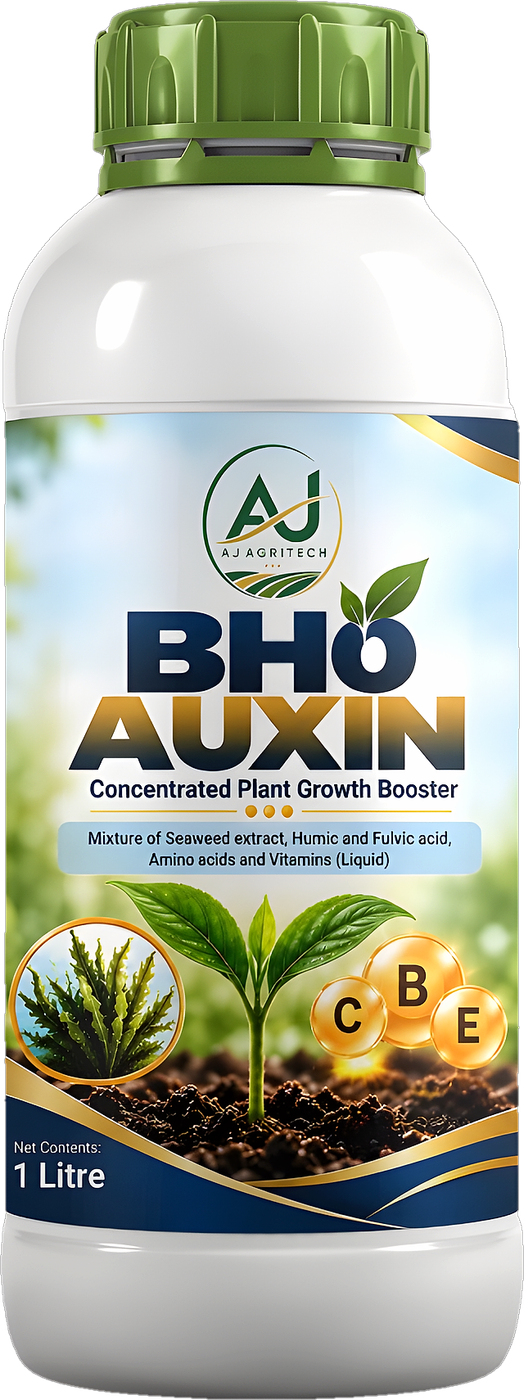 AJ Bho AuxinView details
AJ Bho Auxin, a concentrated growth booster with seaweed extract, humic and fulvic acid, amino acids and vitamins, can be used as per label during establishment after transplanting.
Stage 3: Leaf growth to bulb initiation (20-60 days)
Keep the field weed-free up to 45 days: onion is slow and shallow-rooted, and weeds in this window cut yield heavily. One hand weeding at 40-60 days is usual.
Irrigate at transplanting, on the third day and then every 7-10 days by soil type. Kharif needs 5-8 irrigations, late kharif 10-12 and rabi 12-15; in the clay soils of Andhra Pradesh a 5-day interval suited the December-May crop.
Watch for thrips up to 45 days: curled, twisted leaves with silvery patches. Two border rows of maize sown 30 days before transplanting block adult thrips; for sprays follow the label and officer recommendation.
Stage 4: Bulb development (60-110 days)
This stage is most sensitive to water stress. Give light, frequent irrigation and never follow a dry spell with heavy irrigation, or bulbs split and bolters form. If the soil test or the leaves show a micronutrient gap, DOGR advises correcting it promptly by foliar or soil application.
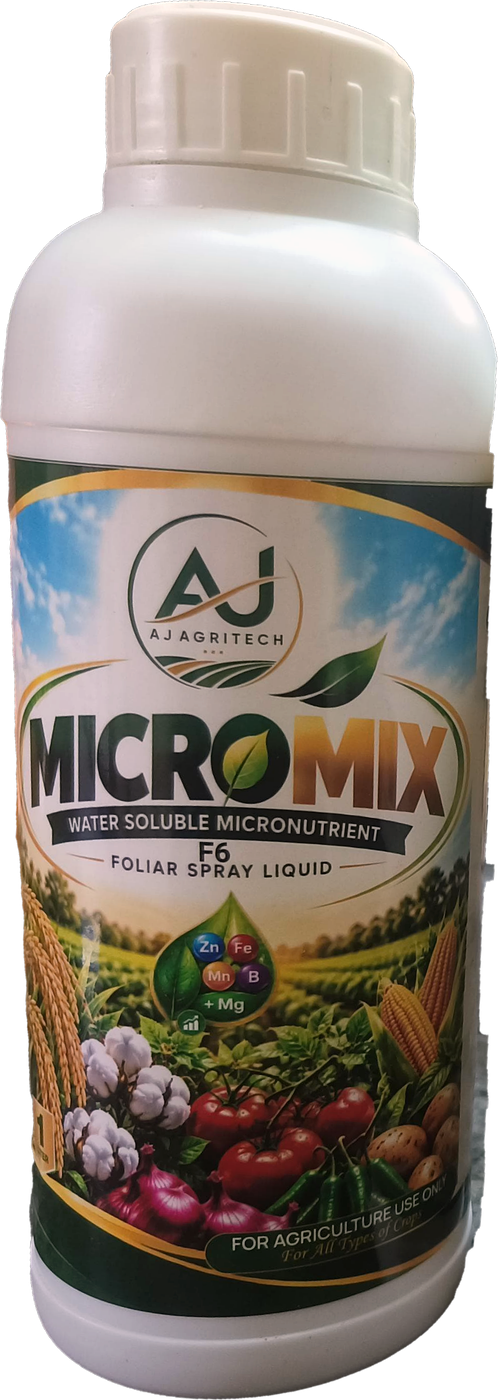 AJ Micromix F6View details
AJ Micromix F6 is a water-soluble micronutrient foliar spray with Zn, Fe, Mn, B and Mg; use it as per label where deficiency is seen.
Stage 5: Harvest, curing and storage
Stop irrigation 10-15 days before harvest, when tops start falling. Rabi onion for storage is pulled at 50-70 percent neck fall.
Kharif tops do not fall: harvest when leaves turn slightly yellow, tops start drying and red colour develops on the bulb. A late kharif harvest gives doubles and bolters.
Field cure 3-5 days with bulbs covered by the leaves of neighbouring plants, not in direct sun. Then cut tops leaving a 2-2.5 cm neck and trim roots.
Shade cure in heaps 2-4 feet high for 10-12 days with good airflow to remove field heat and dry the outer scale.
Sell small, double and bolted bulbs at once. Medium bulbs (50-80 mm) without cuts store best, at 30-35 degrees C and 65-70 percent humidity in a bottom-ventilated structure.
Rabi bulbs store longer than kharif; light-red types such as Bhima Kiran and Bhima Shakti keep 5-6 months. Plan the harvest for a dry, clear spell: rain at harvest means heavy losses.
Quick checklist
Kharif: sow May-June, transplant July-August on raised beds; rabi: sow September-October, transplant November-December.
Plant 15 x 10 cm, trim one-third of the top, no over-aged seedlings.
One-third N plus full P, K and S basal; rest of N at 30 and 45 days; none after 60 days.
Weed-free to 45 days; light irrigation every 7-10 days; no dry spell then flooding during bulbing.
Stop water 10-15 days before harvest; rabi at 50-70 percent neck fall.
Field cure 3-5 days, neck 2-2.5 cm, shade cure 10-12 days; store 50-80 mm bulbs.
Sources
Onion Agropedia: climate, seasons, nursery, transplanting, fertilizers, irrigation, storage — ICAR-Directorate of Onion and Garlic Research (DOGR), Pune
Good Agricultural Practices in Onion and Garlic Production (2022 e-book) — ICAR-DOGR and MANAGE, Hyderabad
Scientific cultivation of kharif onion, Indian Horticulture (March-April 2021) — ICAR (authors from ICAR-DOGR)
Urban Farming: Horticulture crops, season-wise details — Horticulture Department, Telangana